

Neither heel striking nor forefoot striking is safer overall when you run. Each style sends the load to different places: landing on the heel puts more work through the knee, and landing on the forefoot puts more work through the calf, Achilles tendon and the arch of the foot. For most uninjured runners, the research does not support changing the way you naturally land.
That is a less exciting answer than the one you may have heard from a coach or a shoe advert. Here is what the evidence says, and the situations where changing your foot strike is worth a thought.
The short version
- Most recreational runners land on the heel.
- Heel striking loads the knee more. Forefoot striking loads the Achilles and calf more.
- No good prospective study shows either style prevents injury.
- Switching style does not make an uninjured runner more efficient.
- A change can help when a specific injury is being overloaded.
What heel, midfoot and forefoot strike mean
Foot strike describes the part of your foot that meets the ground first. A heel (rearfoot) striker lands on the back of the heel and rolls forward. A midfoot striker lands with the foot roughly flat. A forefoot striker lands on the ball of the foot and lets the heel come down afterwards.
Most people who run in trainers land on the heel. When researchers filmed 936 runners at the 10 km point of a road race, 88.9% were heel strikers, 3.4% landed midfoot and 1.8% landed on the forefoot, while 5.9% landed differently on each foot. In the marathon runners filmed again at 32 km, heel striking had become more common, as tired runners drifted back towards landing on the heel. Foot strike pattern had no significant relationship with finishing time.
Shoes play a part. A well-known study of habitually barefoot runners found they often landed on the forefoot, while runners who grew up in shoes mostly landed on the heel, helped by the raised, cushioned heel of a modern running shoe. That study is where much of the enthusiasm for forefoot running started.
Many runners have no idea which way they land, and what it feels like is not always what happens. A side-on video filmed on a phone at your normal easy pace, played back in slow motion, will usually show it. A 2019 review of 8 studies and 702 participants found that simple 2D video is a reliable way to judge foot strike and count step rate, whatever the experience of the person watching, although evidence on how closely it matches lab motion capture is more limited.
Where each style puts the load
Changing how you land does not remove load from the leg. It moves it. A 2021 meta-analysis of 26 studies found that heel striking produced a larger, faster impact force and put more load through the knee and the joint behind the kneecap. Forefoot striking put more load through the ankle and the Achilles tendon.
A 2025 laboratory study of 20 runners looked at the total load across a mile rather than single peaks. Force through the Achilles tendon and the plantar fascia (the thick band under the sole of the foot) was highest with a forefoot landing, lower with a midfoot landing and lowest with a heel landing. Stress behind the kneecap went the other way, higher with heel and midfoot landings than with a forefoot landing.
So the right question is less "which style is best?" and more "which tissues can take the load right now?" Knees and Achilles tendons have different tolerances, and those tolerances differ from runner to runner.
Does forefoot striking prevent injury?
The research does not show that it does. The most quoted study, of 52 collegiate cross-country runners, found that around 74% had a moderate or severe injury each year and that heel strikers had roughly twice the rate of repetitive stress injuries. The authors were clear that the study did not test cause and effect. It was a small, retrospective look at one university team.
Bigger reviews are more cautious. A 2020 systematic review of 53 studies found only limited, retrospective evidence linking forefoot or midfoot striking with fewer repetitive stress injuries, and noted that prospective studies comparing injury risk were lacking. A 2021 review of 13 studies rated the evidence for any relationship between foot strike and running injury as low, with the supportive studies judged very low quality.
Is forefoot running more efficient?
Not on current evidence. In the 2020 review, habitual heel strikers and habitual forefoot strikers used a similar amount of energy at slow, moderate and fast running speeds. When heel strikers were asked to switch to a forefoot landing, they became less economical in the short term.
The authors concluded that, with no clear gain in economy and a shift of load onto the ankle and calf, changing strike pattern cannot be recommended for an uninjured heel striker. If you are running without pain and your foot lands on the heel, that is a reasonable place to leave it.
When changing your foot strike makes sense
There are times when a change is worth trying, usually as part of managing a specific injury.
- Front-of-knee pain in a heel striker. Landing further forward on the foot reduces load behind the kneecap. Our post on patellofemoral pain covers that condition in more detail.
- Achilles or calf trouble in a forefoot striker. The same logic runs the other way, since a forefoot landing adds load to the Achilles. See our post on Achilles tendinopathy.
- Heel and arch pain. Forefoot landings raise load on the plantar fascia, which matters if you are dealing with plantar fasciitis.
A smaller change is often easier to live with than a full switch. In a study of 45 recreational runners, increasing step rate by 5 to 10% while holding the same speed reduced the energy absorbed at the knee, and at 10% the hip absorbed less too. Shorter, quicker steps tend to bring the foot down closer to the body without asking you to relearn how you land.
If you do change your foot strike, do it gradually. Calves, Achilles tendons and feet need weeks to adapt to extra load, and a sudden switch is a common way to swap a knee problem for a calf or Achilles problem. The NHS lists running technique, hard surfaces and returning to exercise after a break among the causes of shin splints, which is another reason to change one thing at a time.
When to get running pain checked
Most running aches settle with a sensible cut in load. Get help from NHS 111 if the pain is severe, you cannot put any weight on the leg or walk more than a few steps, swelling or bruising is getting worse, or you feel hot, cold or shivery. The NHS advises seeing a GP about foot pain if you have tingling or loss of feeling in your foot, if you have diabetes, or if it has not improved after two weeks of treating it yourself.
Pain that sits on one spot of bone and gets worse with each run also deserves a proper look rather than a change of technique.
If running keeps hurting and you want to know where the load is going and what to change, the team at our sports injury clinic in Luton can assess how you run and what is flaring up. If this sounds like what you're dealing with, an assessment is the next step. Book online here.
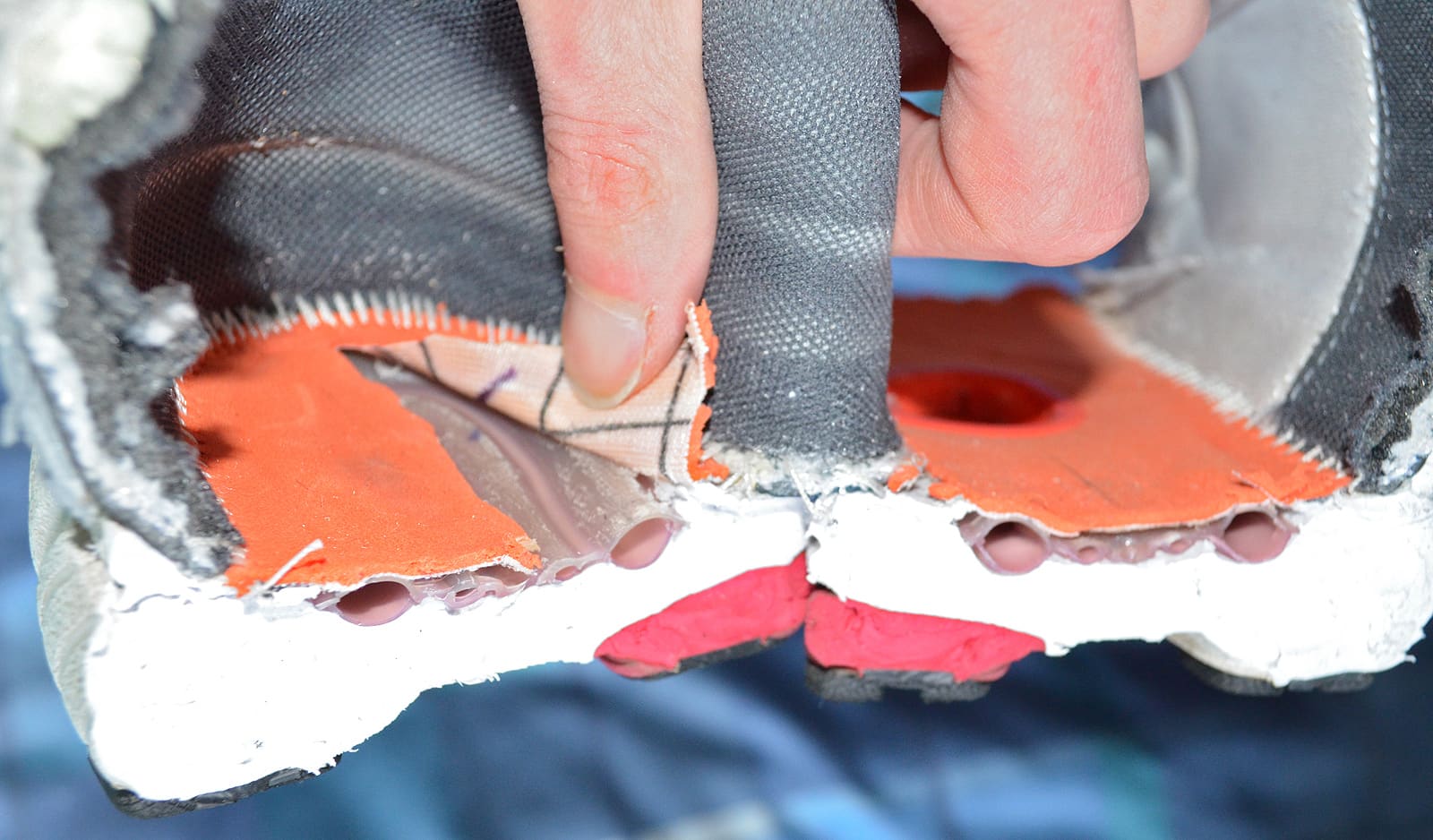
Photo: Yottanesia, CC0, via Wikimedia Commons.