

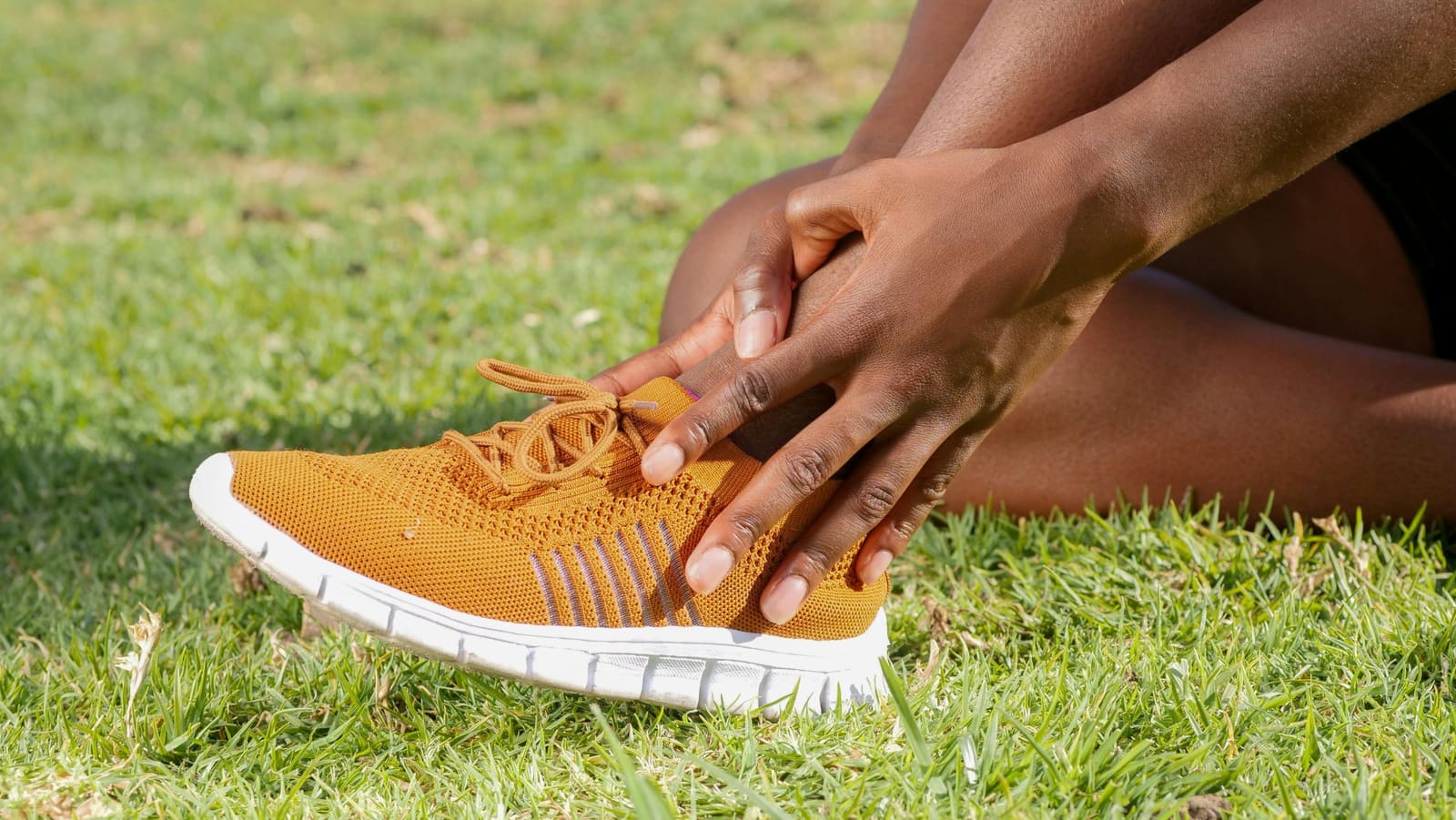
Most sharp heel pain on the first few steps after waking is plantar fasciitis. It tends to ease after a few minutes of moving, returns after long sitting, and gets worse with long walks on hard surfaces. The condition is common, generally self-limiting, and responds better to load management than to rest alone.
The short version
- Plantar fasciitis is a load-related problem of the thick band of tissue under the foot.
- First-step morning pain is the classic sign.
- Most cases improve within 6 to 12 months with conservative care.
- Loaded calf and foot strength work tends to help more than passive stretching alone.
- Red flags (sudden swelling, night pain, numbness) warrant a GP review first.
What it actually is
The plantar fascia is a thick band of connective tissue running from the heel bone to the base of the toes. It supports the arch and absorbs load with every step. When that load exceeds what the tissue can tolerate, you get an irritation at the heel attachment, which is the classic plantar fasciitis pattern.
The NHS describes it as inflammation of this band of tissue. In practice the picture is closer to a degenerative load-tolerance problem than simple inflammation, which is why short rest cycles rarely settle it.
Why the morning-step pain
During sleep the foot sits in a relaxed plantarflexed position. The plantar fascia shortens slightly. The first steps after waking load the cold, stiffened tissue suddenly. After a few minutes of walking the tissue warms, lengthens, and the pain often eases.
The same pattern shows up after long sitting at a desk. Patients describe the first walk to the kettle after an hour at the laptop as the worst part of the day.
What tends to help
The evidence on conservative care is reasonably strong on a few points.
Load management. This is the biggest one. Cut back on barefoot walking on hard floors, long runs on concrete, and prolonged standing while you settle the tissue. Not stopping movement, just modifying the dose.
Supportive footwear with a cushioned heel and arch support. NHS guidance is clear on this. Flip-flops and unsupportive trainers tend to extend recovery.
Calf and foot strength work. A 2015 randomised trial by Rathleff and colleagues found that high-load strength training of the calf and foot intrinsics produced better outcomes at three months than plantar fascia stretching alone. We use a variation of that protocol in clinic. Heel raises with a rolled towel under the toes, performed slowly through full range, are the core movement.
Calf and plantar fascia stretching. Useful as part of a package, not on its own. NICE Clinical Knowledge Summaries list both calf and plantar fascia stretches as conservative options.
Pain relief during flares. Paracetamol or ibuprofen at the dosing on the packet, used for short windows when pain is interfering with sleep or work.
What tends not to help
Pure rest. Tissue that gets no load becomes less tolerant of load. Two weeks of sitting on the sofa often makes the next walk worse.
Aggressive deep pressing on the heel. Some patients arrive after weeks of pressing a tennis ball into the painful spot. The painful spot is the irritated attachment. Pressing harder on it does not calm it down.
Cortisone injections as a first move. They can settle severe pain in the short term but carry a small risk of fascia rupture and the pain tends to return. NICE places them later in the pathway, not as a first option.
Generic online orthotics with no assessment. Some people get relief, many do not. A short trial of an over-the-counter insole is reasonable. Spending heavily on custom orthotics before trying load management is the wrong order.
When to see a clinician
Most plantar fasciitis settles within six to twelve months with patient self-care. Earlier and faster when load is managed properly from week one. Slower when people push through it or do the wrong thing repeatedly. A minority of cases become chronic and need escalation.
See an osteopath, physiotherapist or sports rehab professional if:
- Pain is not improving after four to six weeks of consistent self-care
- You cannot put full weight through the foot
- Pain disturbs sleep regularly
- You are relying on painkillers to function
See a GP urgently if:
- The pain is sudden and severe with bruising or swelling (possible fascia tear)
- There is numbness, pins and needles, or weakness in the foot
- You have night pain with fever or other systemic symptoms
- The pain pattern does not fit the classic first-step morning picture (other causes of heel pain, including tarsal tunnel syndrome and calcaneal stress fracture, need ruling out)
What an assessment looks like at the clinic
An initial appointment for suspected plantar fasciitis is 45 minutes. It includes a history, a movement screen, calf and foot strength testing, a footwear review, and a discussion of daily load. The Institute of Osteopathy describes osteopathy as a manual therapy that uses physical assessment and hands-on treatment to support musculoskeletal recovery.
Treatment is usually a combination of hands-on work to the calf complex and foot, loaded rehab the patient takes home, and a written load-management plan. In our clinical experience, most plantar fasciitis cases see meaningful change within three to six sessions when the home rehab is done consistently. Initial assessment at the clinic is £75, follow-ups £60.
If this sounds like what you are dealing with, an assessment is the next step. Book at hardimanperformance.com/book-online.