

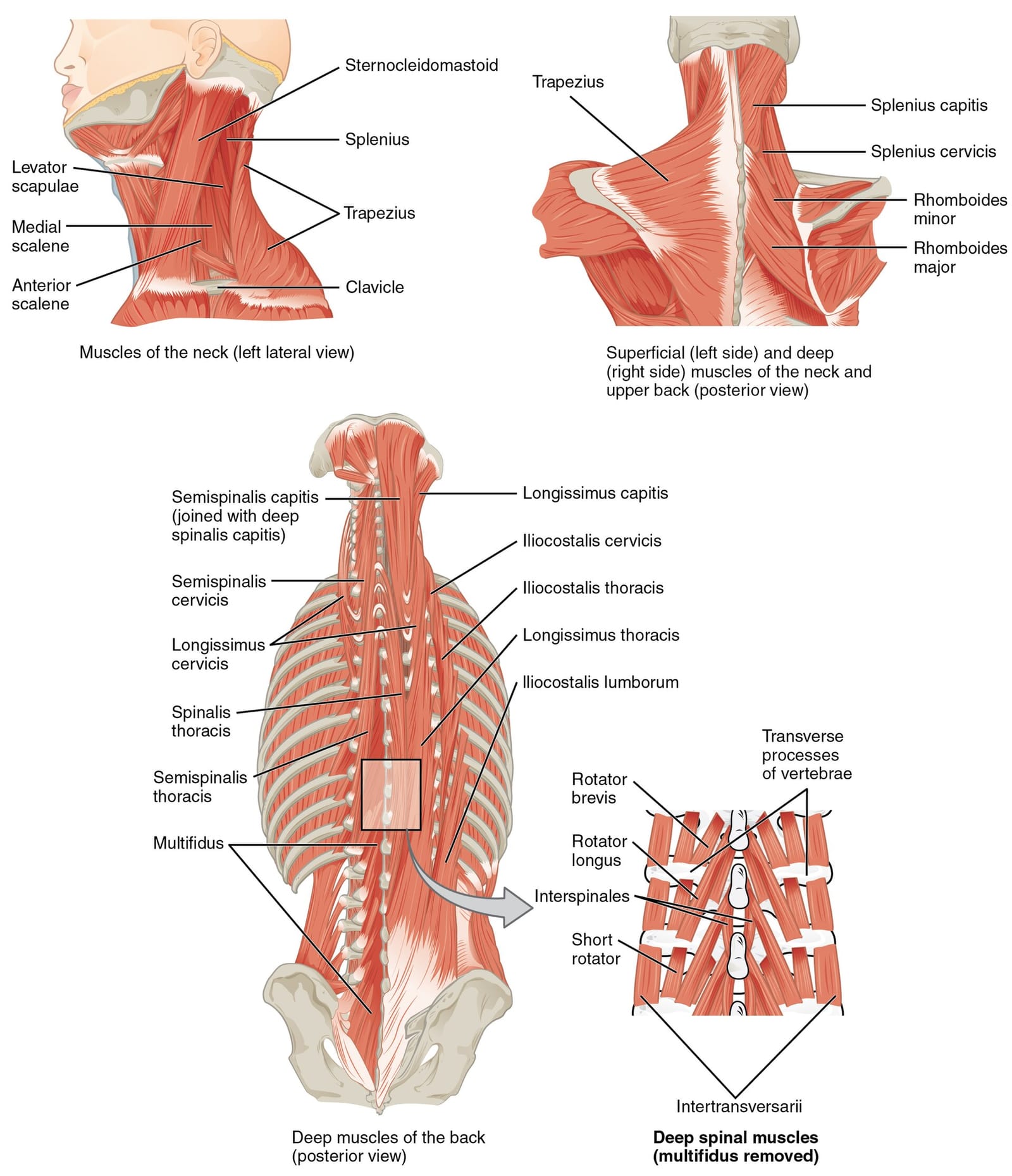
A tension headache is a pressing, tightening pain on both sides of the head. It is mild to moderate, it does not throb, and it does not get worse when you walk about. The muscles around the skull and the top of the neck are usually tender to press in people who get them, which is why the neck takes the blame. Sometimes the neck is genuinely part of the problem. Often it is one part of several.
The short version
- A tension headache is pressing pain on both sides of the head.
- It is mild or moderate and not worsened by normal daily activity.
- Tenderness in the skull and neck muscles is the most consistent finding.
- Painkillers on 15 or more days a month can themselves cause headaches.
- Sudden, severe or new headaches with neurological symptoms need urgent medical assessment.
What a tension headache actually is
NICE guideline CG150 separates the three common primary headaches by their features, and tension-type headache is the plainest of the three. The pain is bilateral. It is pressing or tightening rather than pulsating. It is mild or moderate in intensity, and it is not aggravated by routine activities of daily living. There is no nausea and no unusual sensitivity to light or sound. It can last anywhere from 30 minutes to being more or less continuous.
Frequency matters more than most people expect. NICE calls it episodic when it happens on fewer than 15 days a month, and chronic when it happens on 15 or more days a month for more than three months. NICE's Clinical Knowledge Summary splits the episodic group further: infrequent episodic is less than one headache day a month and usually settles on its own, while frequent episodic means at least ten episodes, on fewer than 15 days a month, over more than three months.
That distinction is worth working out before you see anyone about it. Someone with four headache days a month during a hard stretch at work has a different problem from someone who wakes with a low band of pressure most days of the week. The two do not get the same advice.
Where the neck comes into it
The most consistent physical finding in tension-type headache is tenderness in the muscles around the skull, the ones that attach to the base of the head and run down into the neck and shoulders. A 2011 review in Current Pain and Headache Reports states it directly: the tenderness of pericranial myofascial tissues and the number of myofascial trigger points are considerably increased in patients with tension-type headache.
What that tenderness means seems to change depending on how long the problem has been running. The same review concluded that peripheral mechanisms, meaning input coming from the muscles themselves, are most likely of major importance in episodic tension-type headache. In the chronic form, sensitisation of pain pathways in the central nervous system, driven by prolonged input from those same tissues, appears to be responsible for the switch from episodic to chronic. NICE's summary says the same in fewer words: peripheral mechanisms may play a role in episodic tension-type headache, central mechanisms and heightened pain sensitivity in the chronic form.
The honest caveat, which that review makes itself, is that firm evidence for a peripheral abnormality is still lacking. Tender muscles are found reliably. Proving they are the cause rather than a consequence has been harder than the profession would like, and anyone telling you your neck is definitely the source is going beyond what the evidence supports.
The practical reading is this. If your headaches are episodic and your neck and upper back are stiff and sore to press, the neck is a sensible place to start looking. If they have been near daily for years, the nervous system's own sensitivity is likely doing more of the work, and treating only the muscles tends to disappoint. There is more on that mechanism in our piece on central sensitisation.
Tension headache, migraine, or something else
Migraine is the one people most often confuse it with, and the NICE features table separates them cleanly. Migraine can be one-sided or both, it pulsates rather than presses, it is moderate to severe, and it is aggravated by, or causes avoidance of, routine activities of daily living. It brings nausea, vomiting, or unusual sensitivity to light or sound, and it lasts four to 72 hours in adults. Tension-type headache carries none of those extra symptoms.
Cluster headache is different again. Strictly one-sided, around or above the eye, severe to very severe, lasting 15 to 180 minutes, with a red or watery eye, a blocked or running nose, a drooping eyelid on the same side, and restlessness rather than a wish to lie still.
NICE adds one line that settles a lot of arguments: chronic migraine and chronic tension-type headache commonly overlap, and if there are any features of migraine, diagnose chronic migraine. So if you get a band of pressure most days plus a couple of days a month where it throbs and light hurts, that is a migraine conversation with your GP rather than a tension headache conversation with anyone else.
The painkiller trap
This is the part that changes outcomes most and gets mentioned least. Taking painkillers for headaches too often, or for too long, can itself cause headaches. The NHS calls these overuse or rebound headaches.
NICE gives the thresholds. Be alert to medication overuse headache in people whose headache developed or worsened while they were taking triptans, opioids, ergots or combination analgesics on 10 days a month or more, or paracetamol, aspirin or an anti-inflammatory, alone or in any combination, on 15 days a month or more, for three months or more. NICE also says plainly that opioids should not be offered for the acute treatment of tension-type headache.
It is worth counting your own painkiller days honestly before you spend money on treatment of any kind. NICE's own definition of chronic tension-type headache assumes medication overuse has been ruled out first, which tells you how central it is. If your count sits at or above those thresholds, the first appointment to make is with your GP, not with us.
What the evidence says helps
Start with the uncomfortable bit. NICE's headache guideline makes no recommendation for manual therapy in tension-type headache. What it does recommend, for the chronic form specifically, is a course of up to 10 sessions of acupuncture over five to eight weeks as prophylactic treatment. That is the strongest guideline-backed non-drug option in UK practice, and it sits inside what our medical acupuncture work covers.
The Clinical Knowledge Summary fills in the rest of the management picture for frequent episodic and chronic tension-type headache: avoid frequent and excessive use of acute painkillers, consider physiotherapy, regular exercise, cognitive behavioural therapy and relaxation techniques, and consider a trial of amitriptyline for prophylaxis through your GP.
For hands-on treatment specifically, the trial evidence is real but thin. A 2021 systematic review and meta-analysis in the Journal of Headache and Pain found that manual joint mobilisation techniques might have a positive effect on headache frequency and quality of life at follow-up, and that supervised physical activity might have a positive effect on pain intensity at the end of treatment and on headache frequency at follow-up. The authors downgraded the overall certainty of that evidence to low and very low, and noted that few studies and small sample sizes made solid conclusions difficult. An earlier review of 14 randomised trials reported reductions in headache intensity and frequency, less medication use and better quality of life, while concluding that effectiveness could not be completely assessed because the studies were too varied in design and outcome measures to pool properly.
Read together, that is a fair summary: treating the neck and upper back is a reasonable thing to try for tension-type headache, particularly the episodic kind with obvious muscle tenderness, and nobody should promise you more than that.
The lifestyle side is not filler either. The NHS lists stress, sleep problems and caffeine among the common causes, and suggests relaxation activities, massage and better sleep habits alongside cutting caffeine down. If your headache days cluster on the days you slept badly or drank four coffees, that pattern will tell you more than any hands-on assessment will.
When to get a headache checked urgently
Most headaches are not dangerous. The ones that are come with a short list of signs, and it is worth knowing them.
NHS guidance is to call 999 or go to A&E for a sudden and extremely painful headache, a headache after a serious head injury, or a headache with sudden problems speaking or remembering things, loss of vision, a high temperature, shivering, a stiff neck or a rash. Get urgent advice from a GP or 111 if a headache comes with jaw pain when eating, blurred or double vision, a sore scalp, or numbness or weakness.
NICE separately flags new-onset headache in people with compromised immunity, in anyone under 20 with a history of cancer, in anyone with a cancer known to spread to the brain, and headache with vomiting that has no other obvious cause. A substantial change in the character of a headache you have had for years is worth a GP appointment on its own.
See a GP in normal time if you are getting headaches most weeks, if they are severe, if painkillers and rest are not helping, or if the pain throbs at the front or on one side with nausea or sensitivity to light.
What an assessment looks like here
The clinic team's first job with a headache patient is working out which headache it is, and whether it belongs with us at all. That means going through the history properly: how many headache days a month, where the pain sits, whether it presses or throbs, what happens when you move about, and what you take for it and on how many days. The red flag questions come in the same conversation.
If the picture fits tension-type headache with a neck component, the examination is straightforward. Neck movement in each direction, the joints at the top of the neck, then palpation of the muscles at the base of the skull, the jaw and the upper back to see whether pressing on them reproduces something you recognise. Treatment is hands-on work to those areas plus specific exercise for the neck and upper back, and a look at the desk, sleep and caffeine side of it.
Expectations, stated plainly: if the neck is a genuine driver, you would usually expect some change in headache frequency within a handful of sessions. If nothing has shifted by then, that is useful information rather than a reason to keep booking, and the next step is back to the GP for the prophylaxis conversation. The most useful thing you can bring to a first appointment is a headache diary. NICE suggests recording frequency, duration and severity, any associated symptoms, and every medication taken to relieve the headache, for a minimum of eight weeks.
If this sounds like what you are dealing with, an assessment is the next step. There is more detail on our headache treatment page. Book online here.
Illustration: OpenStax, used under CC BY 4.0, via Wikimedia Commons.