

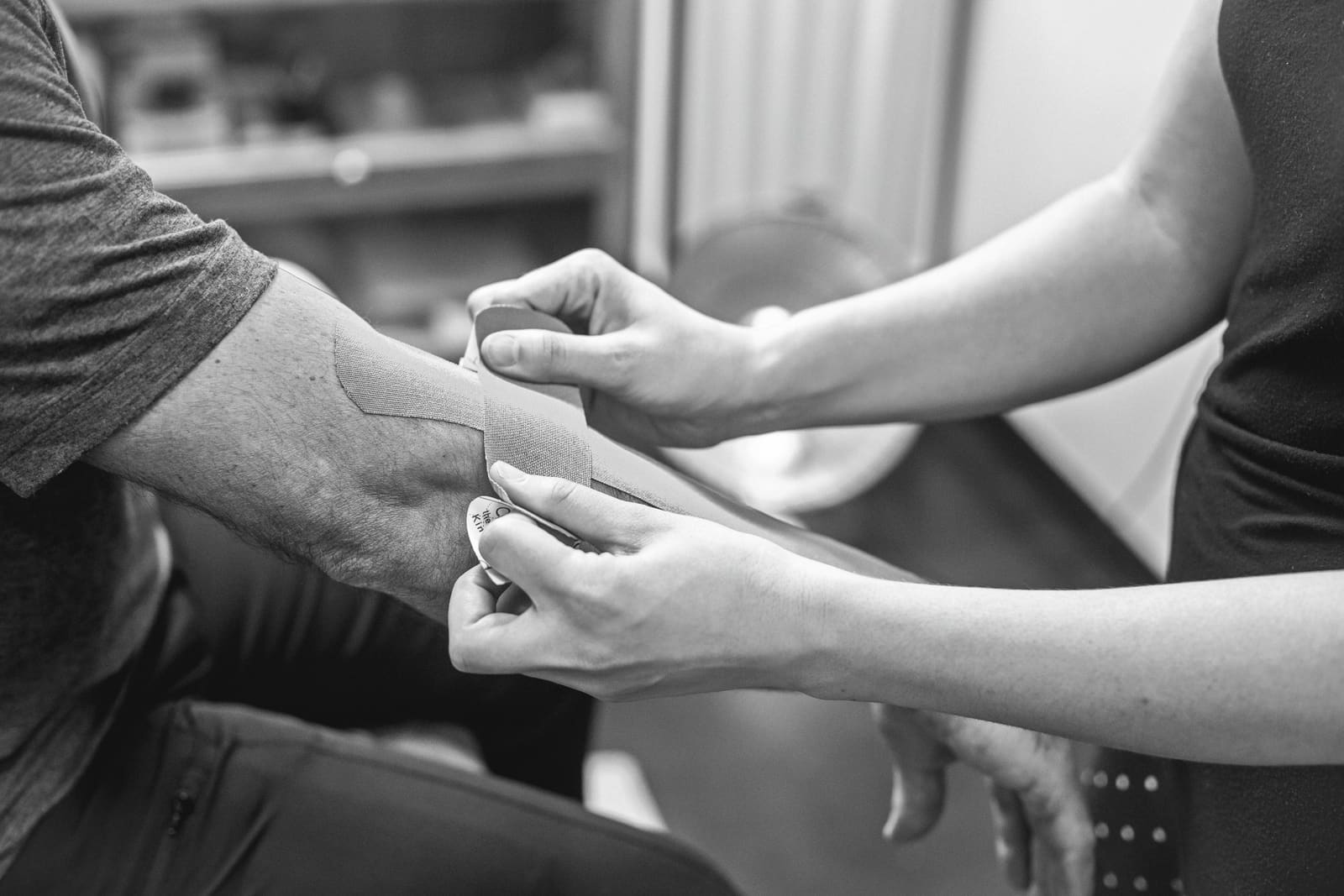
Most tennis elbow is not an inflammation problem and not something that simple rest will settle. It is an overload problem in the tendon that attaches your forearm muscles to the outside of your elbow, usually the one called extensor carpi radialis brevis. The tendon has become disorganised and pain-sensitive, and it needs the right load to recover, not the absence of load. That is why so many people rest for weeks, feel better, then flare again the moment they go back to normal use.
The short version
- Tennis elbow is a tendon overload injury, not simple inflammation.
- Complete rest eases pain short term but rarely fixes the problem.
- Progressive loading and grip work rebuild the tendon over time.
- Cortisone injections often feel great early, then do worse at one year.
- Most cases settle within 6 to 12 months with the right approach.
What tennis elbow actually is
The medical name is lateral epicondylalgia, or lateral epicondylitis if you read older sources. It is pain on the bony point on the outside of the elbow, where the tendons of the muscles that straighten your wrist and fingers anchor onto the bone. The main culprit is the extensor carpi radialis brevis tendon.
The older name ending in “itis” implies active inflammation. We now know that in persistent cases the tendon is not so much inflamed as degenerative and poorly organised. The collagen fibres that should run in neat parallel lines become disordered, and the area becomes sensitive to load. According to the NHS, the vast majority of cases have nothing to do with tennis. Anything that involves repeated gripping and wrist extension can cause it, from manual trades and DIY to long hours at a keyboard and mouse.
Why rest alone rarely fixes it
Resting an irritated tendon feels logical. Stop the thing that hurts and let it heal. The problem is that tendons do not heal well by being left alone. They adapt to load, which means they get stronger and better organised when you give them a controlled, progressive stimulus, and they lose capacity when you take all load away.
So a few weeks of complete rest usually calms the pain, because you have removed the irritation. But the tendon is no stronger than it was. The moment you return to gripping, lifting, or typing at your normal volume, the demand outstrips what the tendon can handle and the pain comes back. People often read this as the injury never having healed, when really it never got the input it needed to rebuild.
This is the core reason rest alone disappoints. It treats the symptom and ignores the mechanism. The tendon needs less of the aggravating spike and more of the right kind of work, not zero work.
What tends to help
The most reliable approach is to settle the irritation, then load the tendon gradually until it can cope with normal life again. In practice that usually means a few things working together.
First, manage the spikes. You do not need total rest, but you do need to reduce the specific movements that flare it, or change how you do them for a while. A thicker pen grip, a different mouse, or splitting a heavy task into shorter bouts can take the edge off without shutting the arm down.
Second, load the tendon. Progressive strengthening of the wrist extensors, often starting with isometric holds and building to slow, controlled gripping and lifting work, is the part that actually changes the tendon. This is dull and it takes weeks, but it is the bit that lasts. A randomised trial published in the BMJ found that a physiotherapy programme of exercise and manual therapy beat a wait and see approach over the first weeks and held up well at one year.
Third, hands-on treatment has a supporting role. Soft tissue work and joint mobilisation to the elbow, wrist and neck can reduce pain enough to let you do the loading work, which is where the durable change comes from. It is a way in, not the whole answer. We use the same principle across most overload injuries we treat at our sports injury clinic.
What the evidence says about cortisone injections
Corticosteroid injections are still offered for tennis elbow, and they can be genuinely tempting because the early relief is real. The problem is what happens later. A well known randomised controlled trial published in JAMA compared corticosteroid injection against placebo, with and without physiotherapy. At one year the injection group had lower complete recovery and far higher recurrence than the people who never had one.
In plain terms, the injection often buys a few good weeks and then leaves you worse off than if you had left it alone. That does not make injections never useful, but it does mean they are not a first line fix for most people, and they are no substitute for rebuilding the tendon.
When to see someone
Most tennis elbow is not serious and settles in time. There are some signs that mean you should get it looked at properly rather than waiting it out, and a few that mean see a GP without delay.
- Pins and needles, numbness or weakness in the hand or fingers, which can point to nerve involvement rather than a simple tendon problem.
- The elbow is hot, swollen and very painful, or you have a fever, which needs same day medical assessment.
- Pain that followed a fall or direct blow, or a sudden loss of strength, which can mean something other than tendon overload.
- Pain that has not improved at all after several weeks of sensible self care, or that is getting steadily worse.
If none of those apply, you are most likely dealing with a straightforward overload tendon problem that responds to the right plan. The NHS notes that most cases improve over time, often within 6 to 12 months, and the right loading work tends to make that recovery smoother and less likely to relapse.
How we approach it
An assessment is mostly about confirming it really is the tendon and not the neck, the joint, or a nerve referring pain to the area, and then working out how much load the tendon can currently take. From there we build up. An initial assessment is £75 and gives us time to examine the arm properly, confirm the diagnosis, and start you on a loading plan you can actually keep up with.
If this sounds like what you are dealing with, an assessment is the next step. Book at hardimanperformance.com/book-online.