

Most sports injuries don’t need an MRI, weeks of rest, or anti-inflammatories on repeat. They need an honest assessment, a plan, and someone who has been broken themselves and put it back together.
That’s what brings most patients through the door at Hardiman Performance. The Stopsley clinic has treated runners with knees that grind, footballers limping out of five-a-side, weekend cyclists with snapped collarbones, jiu-jitsu players with shredded shoulders, and CrossFit athletes who pulled something they shouldn’t have.
If you’re looking for a sports injury clinic in Luton, here’s what to look for, what to expect, and why early treatment matters more than people realise.
Why “rest it” is usually wrong
The default advice for most sports injuries is the same. Ice, rest, take some ibuprofen, see how you go in two weeks. For minor knocks that works. For most things that bring people to a clinic, it doesn’t.
Tendons, ligaments and muscles need controlled load to heal properly. Total rest leads to deconditioning, weakness, and re-injury the moment you go back. The current evidence base supports early movement, graded loading, and addressing the cause rather than just the pain.
That’s the difference between an osteopath who treats sports injuries and a clinician who hands out exercise sheets. The first session at Hardiman Performance is 45 minutes for a reason. There’s real assessment, real treatment, and a plan you walk out with.
What a proper sports injury assessment looks like
A first appointment at the clinic typically covers:
- Full history. What you do, how it happened, what makes it worse, what you’ve already tried.
- Movement screen. Watching how you actually move, not just where it hurts.
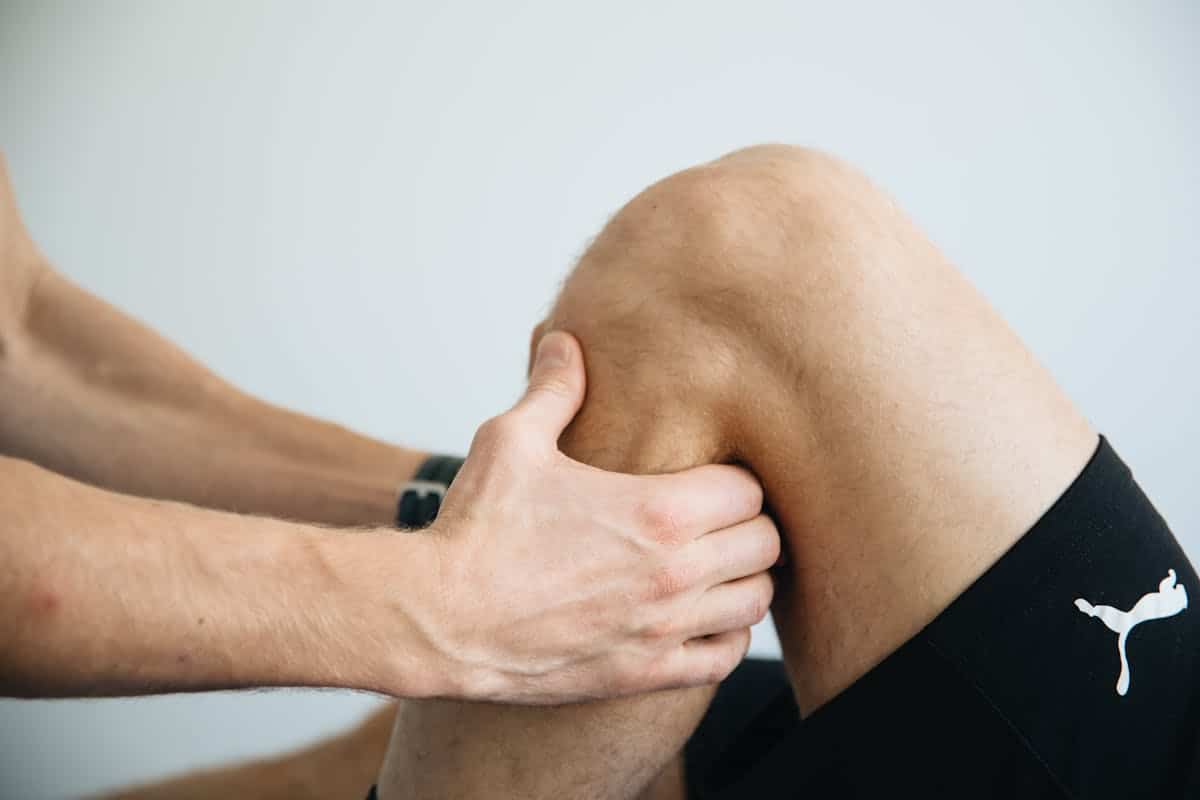
- Hands-on assessment. Specific tests for the joints, muscles and nerves involved.
- Treatment. Manual therapy, mobilisation, soft tissue work, and any techniques relevant to the diagnosis.
- Plan. What recovery looks like, how many sessions are realistic, what you do at home.
If something looks structural and serious, like a suspected fracture, ligament rupture, or red-flag finding, you get pointed to the right specialist. Not every clinic does that.
Common sports injuries treated at Hardiman Performance
Across a decade of clinical work the most common presentations have been:
- Runner’s knee (patellofemoral pain). Usually a load and biomechanics issue, not a structural one.
- Iliotibial band syndrome. Sharp lateral knee pain in cyclists and distance runners.
- Shin splints. Almost always a training load problem.
- Ankle sprains. Under-rehabbed ankle sprains are the single biggest source of recurrent ankle injuries.
- Hamstring strains. Common in sprinters, footballers, and anyone who skipped warm-ups.
- Adductor and groin strains. Common in kicking and rotational sports.
- Shoulder impingement and rotator cuff. Common in throwing athletes, swimmers, and grapplers.
- Lower back pain from lifting. Usually mechanical, usually fixable.
- Tennis elbow and golfer’s elbow. Tendinopathies, slow to heal but very treatable.
- Achilles tendinopathy. Almost always responds to graded loading.
The background that shaped the clinic
Hardiman Performance was founded by Dale Hardiman. Before becoming an osteopath he served five years as a Royal Marines Commando in hostile environments. After leaving the Marines he competed as a professional MMA athlete and an age-group triathlete before completing a Masters in Osteopathy with Distinction from the British School of Osteopathy.
That background shaped how the clinic treats people who push their bodies for a living or for sport. Pain tolerance, training cycles, the mental side of being injured, the difference between hurt and damaged. None of it is theoretical for the people working here.
Day-to-day clinical care is delivered by Jake Coombe, a registered osteopath, alongside Lorraine Dobbs, the clinic’s level 5 sports massage therapist.
How quickly should you book?
The honest answer: as soon as something isn’t getting better on its own. The first 48 to 72 hours after an acute sports injury is the sweet spot for getting an accurate assessment, ruling out anything serious, and starting the right management. Waiting two weeks “to see if it settles” is the most common reason a four-week recovery becomes a four-month one.
For chronic or recurring problems, the niggle that keeps coming back, the pain that goes away with paracetamol but never really goes, the same logic applies. Whatever’s causing it isn’t going to fix itself.
Pricing and what is included
The clinic publishes its prices openly:
- Initial assessment (45 minutes): £75
- Follow-up (30 minutes): £60
- Extended follow-up (60 minutes): £100
Hardiman Performance accepts most major UK private health insurance: Vitality Health, AXA PPP Healthcare, Aviva, Cigna, WPA, and Simplyhealth. If your insurer is on that list there’s usually no charge to you at the clinic.
What patients actually say
The clinic has more than 300 five-star Google reviews. Patients consistently mention three things. Getting a clear answer about what’s wrong, getting better faster than expected, and not being upsold to endless follow-ups. The clinic operates on a discharge-when-fixed principle, not a maintenance model.
Booking and location
Hardiman Performance is at 637 Hitchin Road, Stopsley, Luton, LU2 7UP. Easy parking on site. Open Monday to Thursday 08:00 to 21:00, Friday 08:00 to 18:00.
You can book online in under a minute, or call the clinic on 01582 318980. Same-week appointments are usually available.
FAQ
What is the difference between a sports injury clinic and a regular physio?
A sports injury clinic typically combines manual therapy with progressive rehabilitation, sport-specific knowledge, and an understanding of training load. Hardiman Performance combines osteopathy, sports massage, exercise rehabilitation, and medical acupuncture under one roof.
How many sessions will I need?
Most acute sports injuries respond within three to six sessions. Chronic or complex cases can take longer. You’ll get a realistic estimate at your first appointment, and the clinic doesn’t push patients to keep coming back beyond what is needed.
Do I need a GP referral?
No. Osteopaths are primary care practitioners, which means you can self-refer directly. If you’re claiming through private health insurance, check your policy. Most don’t require a GP referral for osteopathy.
What should I bring to my first appointment?
Loose clothing you can move in (or be prepared to undress for assessment), any scan reports or letters you have, and a list of medications. If there’s a video of the injury happening or you on a treadmill, bring that too. It’s often more useful than people expect.
Can you treat me if I am training for an event?
Yes. The clinic regularly works with athletes preparing for marathons, triathlons, Hyrox, fight camps, and CrossFit competitions. Treatment is timed and structured around your training schedule, not the other way round.
What happens if you cannot fix it?
If your problem needs imaging, injections, or surgery, you get told that early and pointed to the right specialist. The clinic has long-standing relationships with local sports medicine consultants and can fast-track referrals when needed.
Ready to get started? Book your initial assessment online or call 01582 318980.