

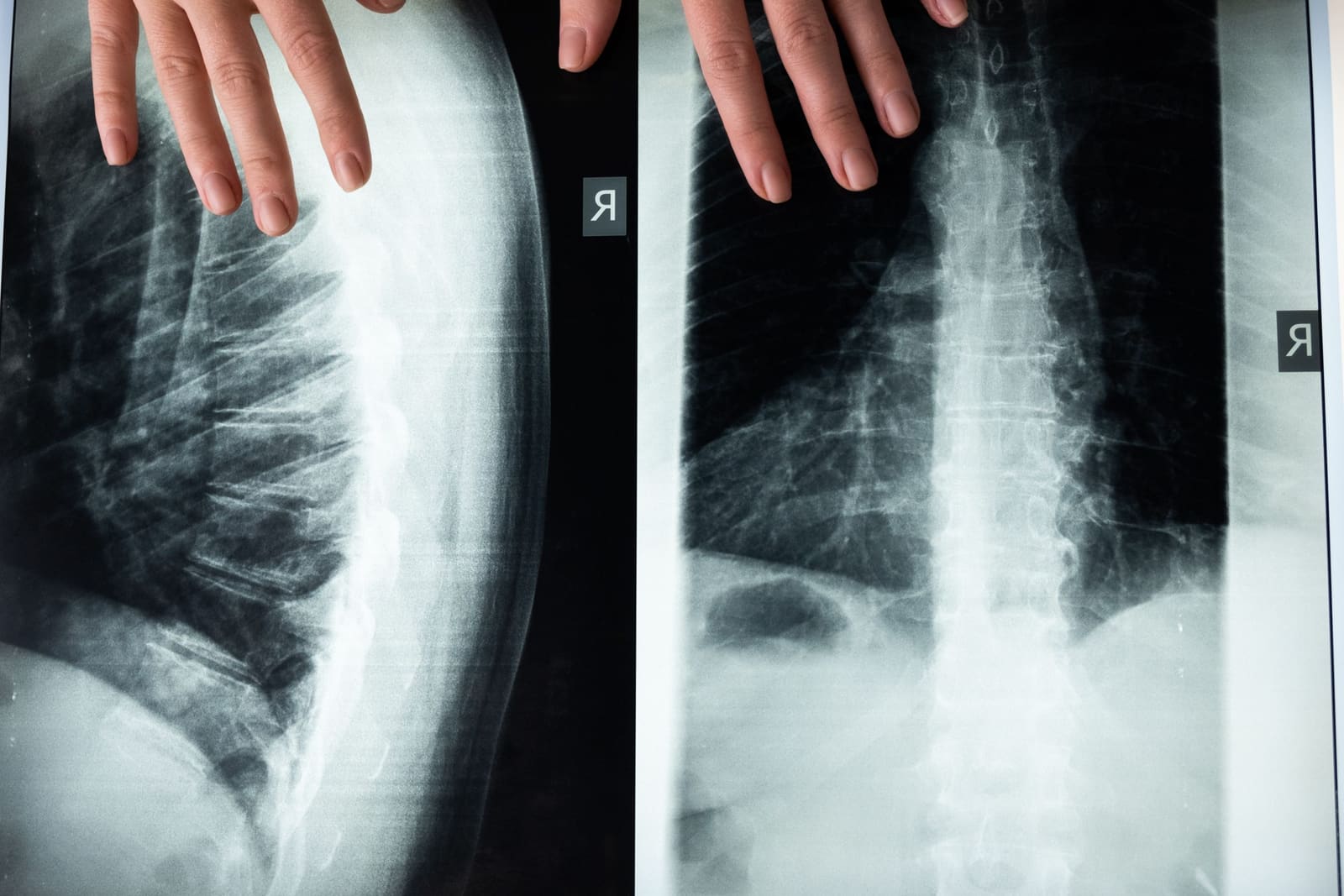
The best sleeping position for most back or neck pain is on your back, or on your side with a pillow that keeps your neck level with your spine. Front sleeping is the position most likely to aggravate things. No position cures pain on its own, but the right setup lowers the load on your spine while the tissue settles.
That is the short answer. The longer answer is that the position label matters less than how you support the body inside it. A side sleeper with no pillow between the knees can be worse off than a front sleeper who has sorted their setup. Here is how each position actually behaves, and what to change.
The short version
- Back or side sleeping suits most people with back or neck pain.
- Front sleeping rotates the neck for hours and arches the lower back.
- A pillow that keeps the neck level matters more than the mattress.
- Most non-specific back pain settles within a few weeks.
- Constant night pain with numbness or weakness needs urgent review.
Back sleeping: the safest default for most people
Lying on your back spreads your weight evenly and keeps the neck in a neutral position, provided the pillow is not too high. A pillow that pushes the chin towards the chest puts the neck under strain all night.
The single best adjustment for back sleepers with lower back pain is a pillow under the knees. Bending the knees slightly takes tension off the muscles at the front of the hips and lets the lower back rest in a more comfortable curve. If you wake with a stiff lower back, try this before you try anything else.
Side sleeping: good, with one adjustment
Side sleeping suits a lot of people, including most of pregnancy, but it has a predictable weak point. When the top leg drops forward it rotates the pelvis and pulls on the lower back. The answer is a pillow between the knees so both legs stay stacked.
For the neck, the head pillow needs to fill the gap between your ear and the mattress so your neck stays level rather than dropping towards the bed. Broad shoulders need a thicker pillow here. If you wake with a one-sided neck ache, the pillow height is usually the first thing to check.
Front sleeping: the one to change if you can
Front sleeping is the position most likely to aggravate back and neck pain. To breathe you have to turn your head to one side and hold it there for hours, which loads the neck joints on that side. The lower back also tends to arch into the mattress.
Changing a lifelong habit is hard, and telling someone to simply stop sleeping on their front rarely works. If you cannot move off it, use a very thin pillow or none under your head, and place a flat pillow under your pelvis and stomach to reduce the arch in your lower back. Over time, many people find side sleeping easier if they start the night on their side with a pillow at their back.
The setup matters more than the position
People spend a lot on the perfect mattress and far less thought on the pillow, when the pillow does more of the work for neck pain. The evidence for any single best mattress is limited, and a medium-firm mattress tends to suit most people. If your current mattress is sagging in the middle, that is worth addressing, but you do not need to chase an expensive replacement to sleep better.
If your pain is recent, our guide to the first 72 hours of lower back pain covers what to do in the early days. Sleep setup is part of that picture, not the whole of it.
Sleep and pain feed each other
Poor sleep and musculoskeletal pain run in both directions. A 2021 systematic review found weak to moderate evidence that more disturbed sleep goes alongside more severe spinal pain, and that sleep problems may even predict pain developing later. So sorting your position is partly about protecting the sleep itself, not only about comfort on the night.
During the day, the same principle applies in reverse. The NHS notes that most back pain improves within a few weeks and that staying active helps more than bed rest. Gentle movement in the day often makes the night easier.
When your sleeping position is not the problem
Most pain that changes with position is mechanical and responds to the kind of adjustments above. Some pain does not, and that is worth knowing about. Get urgent help if you have numbness, tingling or weakness in both legs, numbness around the genitals or buttocks, or any change in bladder or bowel control. Those are red flags for nerve compression and need same-day assessment, as the NHS sciatica guidance sets out.
See a GP, rather than reaching for a new pillow, if you have unexplained weight loss, night pain alongside feeling generally unwell, or pain that started after a serious accident. These point away from a simple mechanical cause.
If this sounds like what you are dealing with, an assessment is the next step. Book at hardimanperformance.com/book-online.