

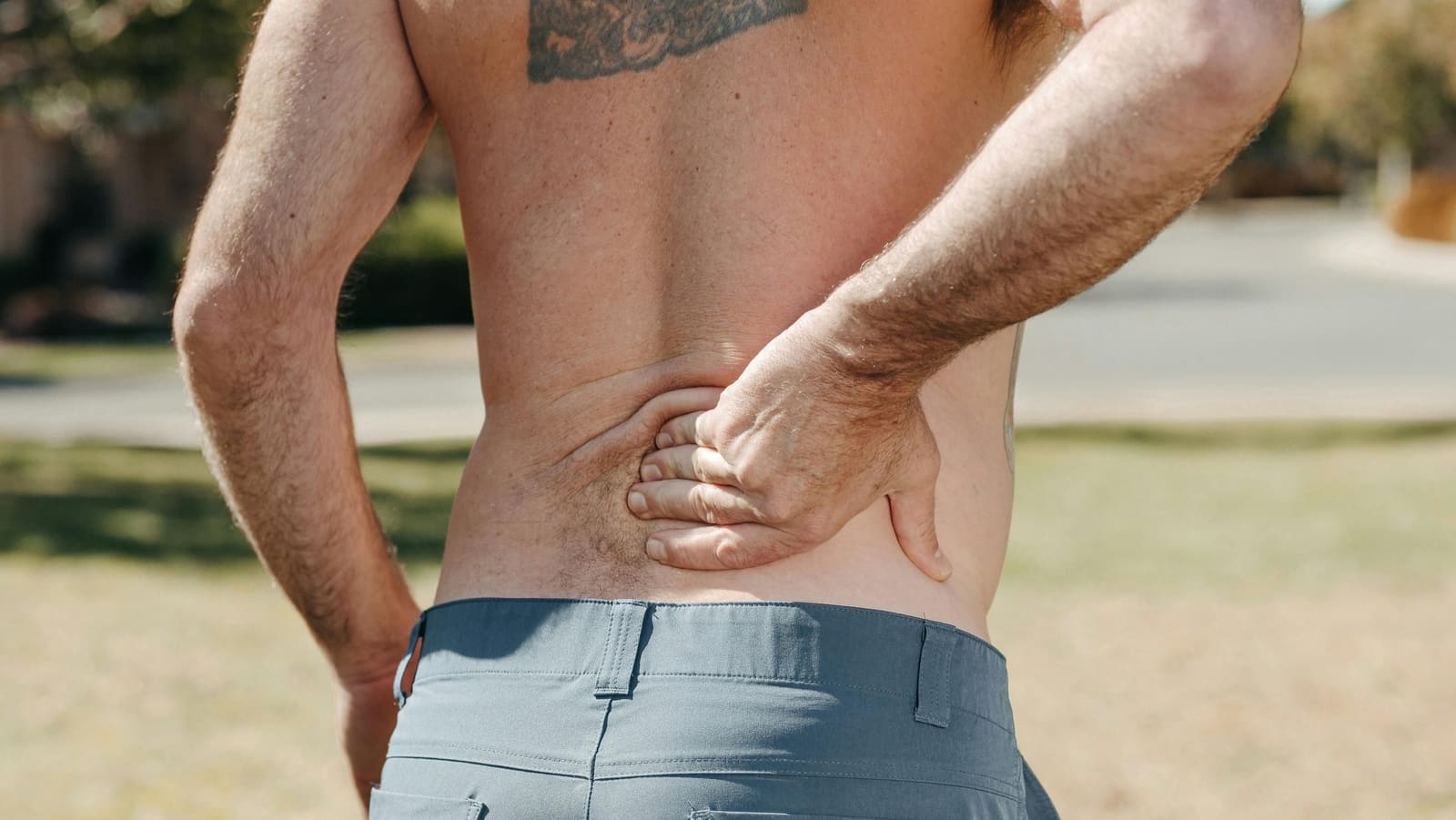
The first 72 hours of new lower back pain set the recovery curve. Move within tolerance, use simple pain relief, and keep going about your day on a slower setting. Prolonged bed rest makes things worse. This is what to do day by day, what to avoid, and when the pain warrants a GP visit rather than just time.
The short version
- Most acute lower back pain improves within a few weeks.
- Gentle movement helps. Lying flat for days slows recovery.
- Paracetamol and ibuprofen, taken as directed, are reasonable first-line relief.
- Heat tends to help muscular pain. Ice has a smaller role.
- See a GP urgently for saddle numbness, new leg weakness, or bladder or bowel changes.
First 24 hours
Most new back pain comes on after a movement that, in isolation, was not unusual: bending to pick something up, twisting in a car seat, getting out of bed awkwardly. The pain is often disproportionate to the cause. That is normal and does not mean serious damage. The NHS notes that most cases of back pain improve within a few weeks without specific medical treatment.
In the first day, the aim is simple: stay upright and mobile for short periods, sit and lie down when needed, and avoid completely seizing up. A useful pattern is two or three minutes of slow walking around the house every 30 to 45 minutes during waking hours, plus normal rest.
If pain relief is needed, paracetamol is a reasonable starting point. Ibuprofen can be added if there is no contraindication, such as kidney issues, a history of stomach ulcers, asthma triggered by NSAIDs, or certain blood pressure medications. Stick to label doses. NICE guidance NG59 on low back pain recommends NSAIDs as a first-line pharmacological option when needed, at the lowest effective dose for the shortest period.
Heat helps many people in the first 24 hours. A wheat bag or warm bath relaxes the muscles around the spine. Ice has a smaller role for mechanical back pain than most people assume and is more useful where there is clear acute inflammation.
Day 2 and day 3
By day two or three, the picture usually clarifies. Most people are still sore but moving better. A smaller group feel worse: pain that has spread, sleep disrupted, or new symptoms in a leg.
Both are normal. Recovery from back pain is rarely linear. The goal during this window is to gradually expand what you do without provoking a strong flare. The NHS exercises for back pain page has a sensible starting set: knee-to-chest, pelvic tilts, and gentle back extensions. Do them slowly. If a movement increases pain by more than 2 or 3 out of 10 above baseline, back off and try again the next day.
Keep working if you can. Returning to work, even modified work, is associated with better outcomes than staying off. If the job involves heavy lifting, that may need adjusting for a week or two. Sitting for long stretches is often the harder part, so stand and move every 20 to 30 minutes.
What helps and what does not
What tends to help in the first 72 hours:
- Walking, in short bouts, at whatever pace you can manage.
- Heat: wheat bag, warm bath, hot water bottle.
- Gentle range-of-motion movement, not stretching to end range.
- Sleeping in whichever position lets you actually sleep. The right position is the one you wake up in less sore.
- Paracetamol and ibuprofen, used sparingly and as directed.
What tends not to help, or actively makes things worse:
- Bed rest beyond the first 24 hours.
- Aggressive stretching of an angry back, on the logic that you can stretch it out.
- Foam rolling directly on the spine.
- Trying to self-diagnose by reading an old MRI report. Imaging findings often do not match symptoms.
- Strong opioid painkillers as a first-line measure.
When to see a GP urgently
A small number of back pain presentations need urgent medical assessment, not osteopathy and not waiting it out. See a GP or go to A&E if any of these apply:
- Numbness in the saddle area, around the groin or back passage.
- New weakness in one or both legs.
- Loss of control of bladder or bowel function.
- Difficulty starting or stopping urination.
- Severe night pain that wakes you, with fever, unexplained weight loss, or a history of cancer.
- Severe pain after a significant fall or accident.
- Pain in someone under 20 or over 55 with no obvious cause.
These can signal conditions like cauda equina syndrome or other serious pathology, which need imaging and specialist input quickly. The NHS sciatica guidance covers these red flags in patient-friendly language. For most people, none of these apply, and the pain settles with the simple measures above.
When to see someone for treatment
If pain is not improving by the end of the first week, or is improving very slowly, an assessment is worth booking. The point of a hands-on appointment at this stage is twofold. First, rule out anything that needs onward referral. Second, start a treatment plan that combines manual therapy with the right movement work for your specific presentation.
A first osteopathy appointment in the clinic takes 45 minutes and costs £75. We go through your history, do a movement assessment, and start treatment in the same session. Most acute lower back pain responds to a short course of two to four follow-ups, scheduled over a few weeks.
If this is the situation you are in, an in-person assessment is the next step. Book at hardimanperformance.com/book-online.