

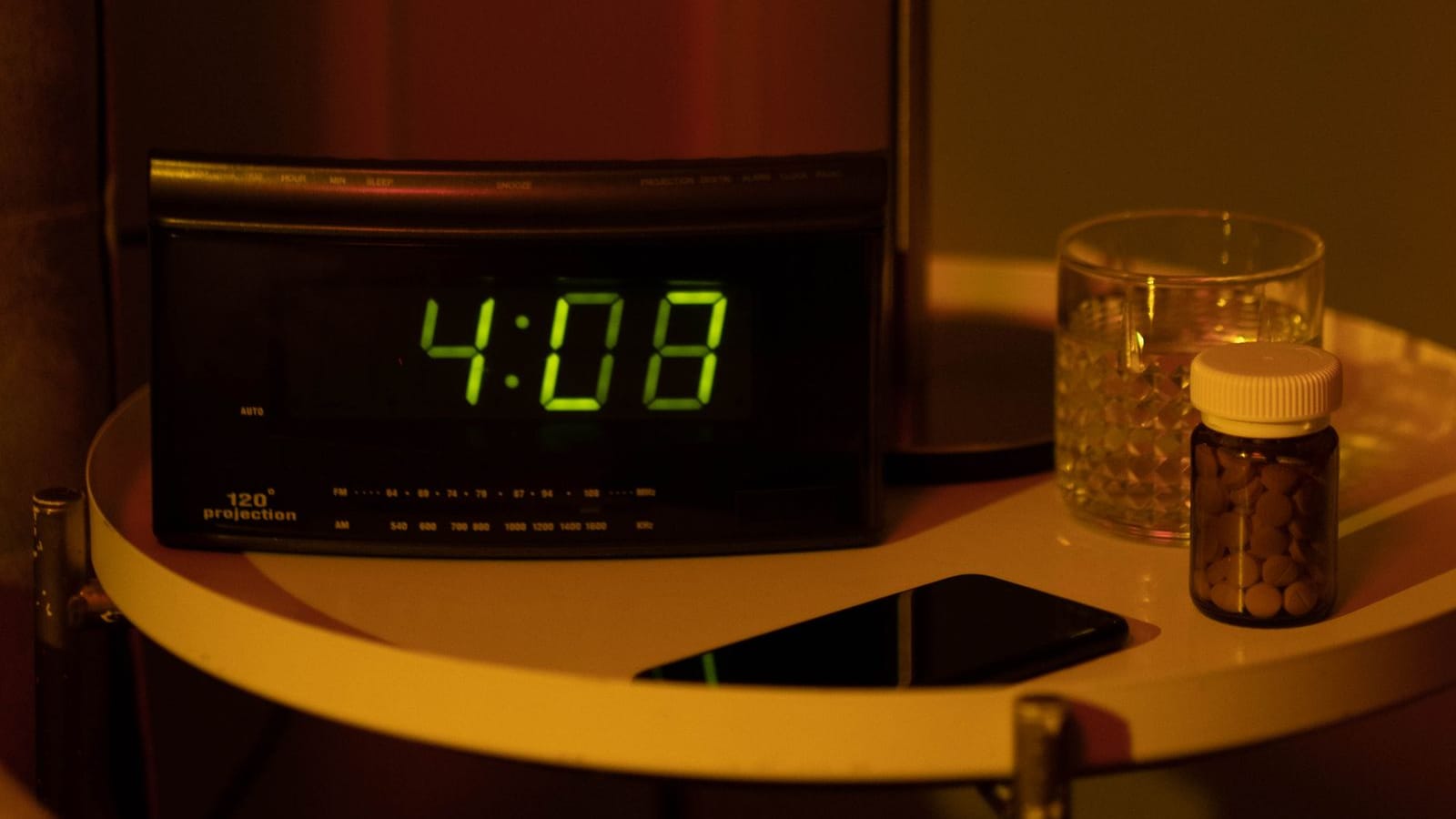
If an injury or a painful area is taking longer to settle than you expected, sleep is worth checking early. Adults need seven to nine hours a night. Poor sleep predicts new pain more reliably than pain predicts poor sleep, which makes sleep a treatment target rather than a side issue.
I spent long enough in the Marines to know what running on four hours does to a body, and in my years of practice the pattern turned up often: the patients who plateaued were frequently the ones sleeping badly. The clinic team still sees it. What has changed is that the evidence has caught up.
The short version
- Adults need 7 to 9 hours of sleep a night.
- Poor sleep predicts new pain more reliably than pain predicts poor sleep.
- Declining sleep is linked to a two to three-fold rise in pain risk.
- One short night is enough to lower your pain threshold.
- Treat sleep as part of rehab, not an afterthought.
Which way does the arrow point?
The obvious assumption is that pain wrecks sleep. It does. The more useful finding is that it also runs the other way, and that direction may be the stronger one. A 2013 review in the Journal of Pain concluded that sleep impairment is a stronger and more reliable predictor of pain than pain is of sleep impairment.
The size of the effect is not small. A systematic review of 16 longitudinal studies covering around 61,000 people found that a decline in sleep quality or quantity was associated with a two to three-fold increase in the risk of developing a pain condition, alongside small rises in inflammatory markers and a drop in self-reported physical health.
That is the kind of number that should change what a clinician asks about. NICE takes the same position at guideline level: its chronic pain guidance tells clinicians to ask specifically about sleep disturbance when working out how pain is affecting someone's life.
What short sleep does to pain
The mechanism is not mysterious, and it moves quickly.
In a 2019 brain imaging study, a single night of sleep deprivation amplified pain reactivity in the primary sensing region of the cortex while blunting activity in the regions that help modulate pain. Behaviourally that showed up as a lower pain threshold. The same team tracked people outside the lab and found that ordinary night-to-night changes in sleep quality predicted next-day changes in how much pain those people reported.
Weeks of short sleep do something different again. A laboratory study that put healthy adults through three weeks of restricted sleep, five nights of four hours followed by two nights of eight, found reduced habituation to cold pain and increased temporal summation. In plain English, the volunteers stopped getting used to a repeated painful stimulus and instead started winding up in response to it. The detail worth holding on to is that the two recovery nights each week did not fully undo the change. It was a small study, 17 healthy adults, so treat it as a signal rather than a settled fact.
Sleep, injury risk and repair
This is where I want to be careful, because the two halves of the question sit on very different quality of evidence.
Injury risk has some data behind it. In a study of 112 adolescent athletes, those sleeping under eight hours a night were 1.7 times more likely to have had an injury. Read the confidence interval before you repeat that at anyone: it ran from 1.0 to 3.0, meaning the real effect could be close to nothing or could be triple. It was also a retrospective study in teenagers, so applying it straight to a 45-year-old Sunday league player is a stretch.
Tissue repair is thinner still. The idea that sleep is when soft tissue heals is plausible and widely repeated, but the human evidence that sleeping more speeds up tendon or muscle healing is weak. I would not tell a patient that extra sleep will heal their hamstring faster. I would tell them that sleeping badly appears to make the pain louder and the rehab harder to stick to, which is a different and much better-supported claim.
Getting to seven hours
The NHS self-help advice for insomnia is unglamorous, and it is where to start. Go to bed only when you are sleepy. Get up at the same time every day, including after a bad night. Keep the room dark and quiet. Leave at least six hours between your last alcohol, tea or coffee and bedtime. Exercise during the day, but not in the four hours before sleep.
Two additions from a musculoskeletal angle. First, if pain is the thing waking you, position matters, and it is worth reading what we have written about sleeping position and back or neck pain before you go and buy a new mattress. Second, if you are mid-rehab, put the sleep window into the plan next to the exercises. A rehab programme built on the assumption that you are sleeping six hours and coping is built on a shaky base.
If poor sleep has run alongside pain for months, cognitive behavioural therapy for insomnia is worth asking your GP about. A meta-analysis of 12 randomised trials in people with both chronic pain and insomnia found a large effect on sleep and a small one on pain. Be clear-eyed about that split. It improves the sleep substantially and nudges the pain a little.
When to see a GP rather than manage it yourself
Some combinations of pain and sleep need a doctor rather than a self-help list.
Pain that is worse at night, or that does not improve with rest, is on the NHS list of reasons to see a GP about back pain, along with losing weight without trying, a lump or swelling in your back, and pain coming from between the shoulder blades rather than lower down. Feeling hot, cold, shivery or generally unwell alongside back pain warrants an urgent GP appointment or a call to 111.
Call 999 or go to A&E if you have back pain with numbness, tingling or weakness in both legs, a loss of feeling around your genitals or anus, or a change in bladder or bowel control. Those signs will not wait until morning.
Separately, if you snore loudly, wake up gasping or choking, or feel very tired every day no matter how long you spend in bed, ask about sleep apnoea. It is common, it is treatable, and every other conversation about sleep and pain stays theoretical until it is dealt with.
Where hands-on treatment fits
Osteopathy does not treat insomnia, and I am not going to pretend otherwise. What an assessment can do is establish whether there is a mechanical reason you cannot get comfortable at night, whether the pain pattern is one that responds well to manual treatment and graded loading, and whether the plan you are following is realistic for someone who is sleeping badly.
The clinic team commonly finds that the sleep conversation is one nobody has had with the patient before. It is usually worth ten minutes of the appointment.
If this sounds like what you are dealing with, an assessment is the next step. Book online here.