

Most footballers should plan on at least nine months between ACL reconstruction and their next match. In one cohort, re-injury rates fell by 51% for every month of delay up to nine months, then stopped falling. Time alone does not clear you, though. Strength, hop tests and how the knee behaves in training all count.
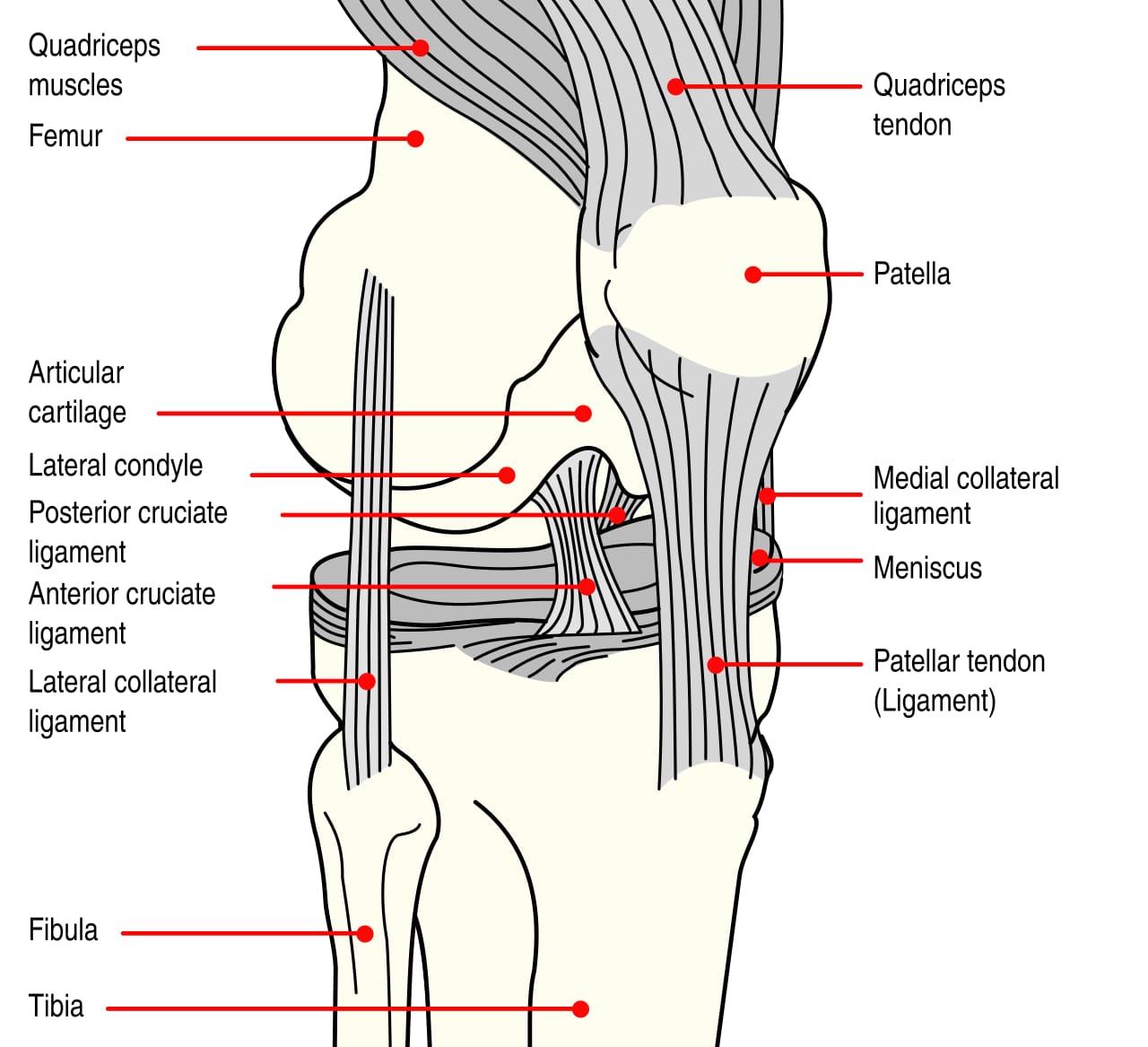
The ACL (anterior cruciate ligament) is a band of tissue inside the knee that helps it move and stay stable. The NHS lists twisting the knee and quickly changing direction or speed among the ways it gets injured, which is a fair description of football. This post covers whether you need surgery, where the nine-month figure comes from, which tests matter, how many players get back, and the odds of a second injury.
The short version
- Plan on at least nine months after surgery before playing matches.
- Each month of waiting up to nine months cut re-injury sharply in one study.
- Strength and hop tests help, but they do not guarantee safety.
- Some ACL tears do not need surgery. Rehab first is a valid option.
- Around one in five people who return to sport have a second ACL injury.
Do you need surgery to play football again?
Not always. The NHS says not all ACL injuries need surgery, but that it is usually recommended if you plan to keep doing lots of sport, your knee gives way a lot, or other parts of the knee are damaged. Most people reading this post fall into the first group, so surgery is likely to come up.
The main trial on the question is KANON, from Sweden. It took 121 young, active adults with a fresh ACL tear and compared rehab plus early reconstruction with rehab plus the option of surgery later. At two years the scores were almost identical. At five years there was still no significant difference, and 51% of the rehab-first group had gone on to have a delayed reconstruction. Roughly half of that group avoided the operation.
Two cautions apply. Cochrane found only this one trial and rated the evidence as low quality, and it noted that serious events in the rehab group were mainly knee instability, which is the problem a footballer can least afford. A later analysis of the same trial found MRI signs of ACL healing in 30% of the rehab-first group at two years, linked with better outcomes, but that is a secondary analysis and the authors word it carefully.
Published management recommendations list three routes: rehab first with surgery only if the knee stays unstable, early surgery, or a block of rehab before surgery. That choice belongs in a conversation with your surgeon, and it is worth having before you assume the operation is automatic.
Why nine months is the number
Two studies do most of the work here. The Delaware-Oslo cohort followed 106 people in pivoting sports for two years after reconstruction. The re-injury rate fell 51% for each month return was delayed until nine months, with no further reduction after that. A second cohort of 159 athletes aged 15 to 30 found that going back to knee-strenuous sport before nine months was linked with roughly seven times the rate of a second ACL injury.
Professional football runs faster. Across 78 clubs in the UEFA men's study, the median layoff was 6.6 months to training and 7.4 months to match play. In elite women's football, an ACL injury cost a median of 292 days. Those players have full-time medical staff and rehab is their job. In my view, someone fitting rehab around work and a Sunday league fixture list should not treat the professional timeline as a target.
The evidence has limits. These are observational studies, and a later analysis of the men's data found that time to return to training was not an independent predictor of second ACL injury, though there was a tendency towards lower risk with longer time. Nine months is best read as a sensible minimum.
What should be in place before your first match
Testing adds information that a calendar cannot give you. In a study of 158 male professional athletes, those who did not meet all six discharge criteria before returning to team training had about four times the risk of graft rupture. The tests covered strength at several speeds, a running test and three hop tests. Weak hamstrings relative to the quadriceps on the operated leg also raised the risk.
In Delaware-Oslo, more symmetrical quadriceps strength before return reduced the re-injury rate. Of those who failed the return criteria, 38.2% were re-injured, against 5.6% of those who passed, although that particular gap fell just short of statistical significance in a small sample.
The picture is untidy. A 2019 meta-analysis found that only 23% of patients passed return-to-sport test batteries. Passing reduced the risk of graft rupture but was linked with a higher risk of injuring the other knee, and the authors called the findings equivocal. The seven-times cohort above found no link between symmetry and second injury. So tests are useful and imperfect, and a pass is one input to the decision.
With that in mind, this is the checklist I would want ticked. It is my reading of the evidence rather than a validated protocol:
- At least nine months since surgery, if you had a reconstruction.
- Quadriceps and hamstring strength measured on both legs, with the operated leg close to the other. Delaware-Oslo used a pass mark above 90%.
- Hop tests at a similar standard.
- A block of full, unrestricted team training first. In the UEFA data, the ACL injury rate in matches was 20 times the rate in training.
- Confidence in the knee. A positive psychological response favoured getting back to pre-injury sport in a large review of return rates.
How many players get back, and what are the risks?
Across 69 articles and 7,556 people, 81% returned to some sport, 65% to their pre-injury level and 55% to competitive sport after reconstruction. That covers all sports. Among male professional footballers with a total rupture, 65% were playing at the same level three years on. If you are finding the road back harder than the headlines suggested, those numbers say you are far from alone.
Second injuries are common. A meta-analysis put the second ACL injury rate at 15% overall, 20% in people who returned to sport and 23% in under-25s who returned. In professional football the rate was 17.8%, split almost evenly between the operated knee and the other knee, and 11 of 26 players whose first injury was non-contact and isolated went on to a second one. Both legs need the work.
There is a longer-term issue too. The odds of knee osteoarthritis are about four times higher after an ACL injury than in an uninjured knee, although the authors warn of large inconsistency between studies. All of this makes the case for finishing rehab properly and keeping the strength work going after you are back. A structured warm-up is worth keeping as well. In a trial of 1,892 young female footballers, one reduced severe injuries, although the main outcome did not reach significance.
What the rehab usually looks like
You will need physiotherapy after surgery, and recovery takes several months or more. Current recommendations are phase-specific, so you should move on when you meet the criteria for the next stage. Your surgeon's protocol comes first, but a typical pattern looks like this:
- Settle the swelling and get the knee fully straight and bending well.
- Rebuild quadriceps and hamstring strength with progressive loading.
- Introduce running, then jumping and landing.
- Add cutting, change of direction and football drills.
- Return to full training, then to matches.
If a physiotherapist is running your rehab and it is moving forward, stay with them. The clinic team can help through our exercise rehabilitation service if the plan has stalled, if you were discharged before you felt ready, or if you want a second assessment before going back. If an ache at the front of the knee is what is holding you up, our post on patellofemoral pain is a good next read.
When to get help urgently
After a knee injury, the NHS says to get advice from 111 if your knee is very painful, you cannot move it or put weight on it, it is badly swollen or has changed shape, or it locks or gives way.
If you have recently had ACL surgery, ask for an urgent GP appointment or contact 111 if you have throbbing or cramping pain in your leg, a high temperature, you feel hot and cold, your wound is oozing, or tenderness, swelling, pain or redness in the knee is getting worse. These can be signs of infection or a blood clot.
Call 999 or go to A&E if you have pain and swelling in your leg along with difficulty breathing or chest pain.
If this sounds like what you're dealing with, an assessment is the next step. Book online here.
Illustration: Mysid, public domain, via Wikimedia Commons.