

Pain neuroscience education means teaching people how pain works, so that their pain feels less threatening. On its own it has a small effect on pain. Combined with exercise, the research says it does more: less fear of movement, less disability and somewhat less pain, at least in the short term.
That is a more modest claim than you will hear from some clinicians, and a more useful one than you will hear from others. This post covers what the education involves, what the trials show, and where it falls short.
The short version
- Pain neuroscience education explains how the nervous system produces pain.
- On its own, it has a small effect on pain intensity.
- Paired with exercise, it reduces pain, disability and fear of movement more.
- Longer, repeated education shifts fear and catastrophising more than one talk.
- It suits persistent pain. Acute back pain mostly needs reassurance and activity.
What is pain neuroscience education?
Pain neuroscience education, often shortened to PNE, is a structured explanation of how pain is produced. The central idea is that pain is an output of the brain, a protective response to how much danger it thinks the body is in. Pain is real, and the tissues do matter, but the volume of the alarm can drift away from the state of the tissue, especially once pain has gone on for months.
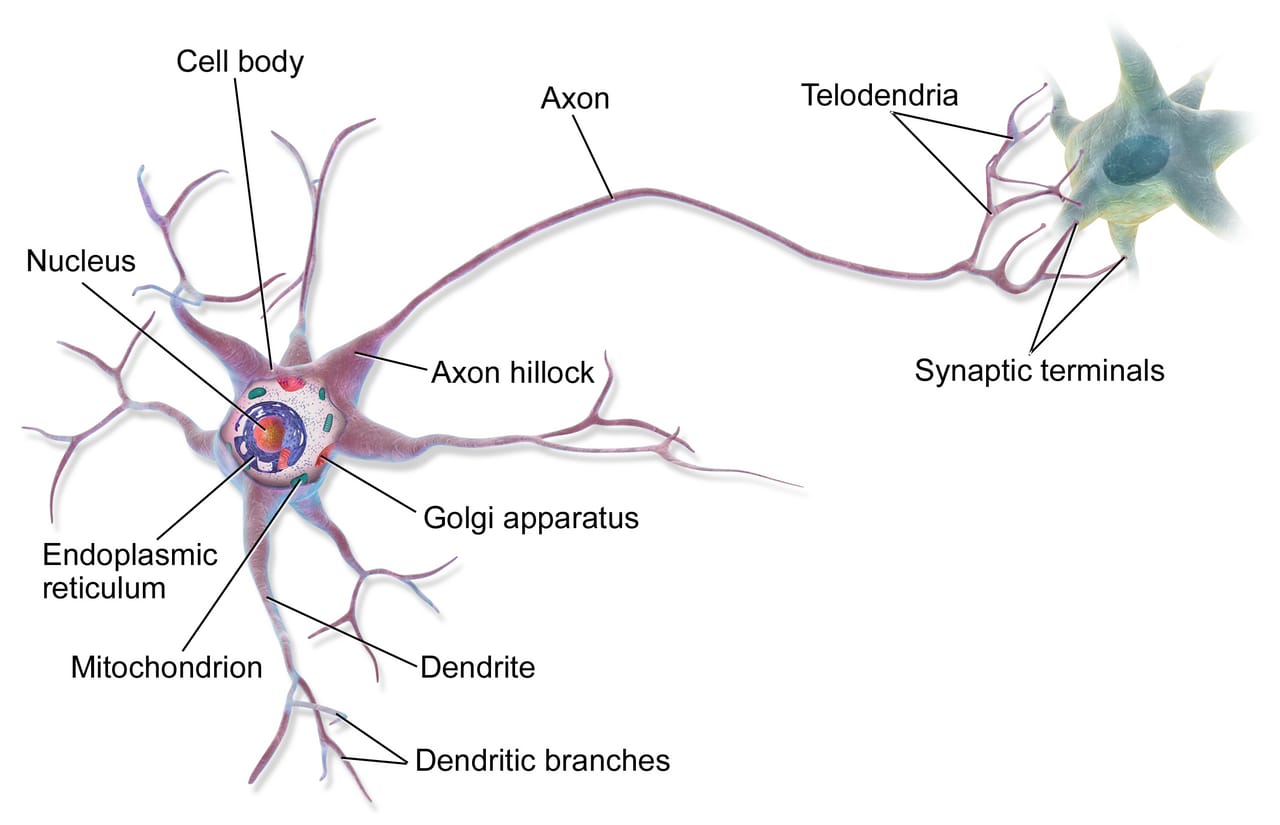
A good explanation usually covers a few points. Nerves carry danger signals, and the brain weighs them against everything else it knows: past injuries, stress, sleep, what you have been told about your back. With persistent pain, the system can become more sensitive, so ordinary movement triggers a protective response. We covered that process in more detail in our post on central sensitisation.
The purpose of the education is practical. If you understand that a twinge while bending is your alarm system being cautious, rather than a sign of damage getting worse, you are more likely to keep moving. The researchers call this reconceptualising pain. In plain terms, it means pain stops being read as a damage report.
What does the research show?
The evidence is mixed, and the pattern in it is consistent enough to be useful.
A 2019 systematic review and meta-analysis in the Journal of Pain pooled 12 randomised trials with 755 people who had chronic musculoskeletal pain. Compared with control treatments, PNE reduced pain by around 6 points on a 100-point scale, and disability by 4 to 8 points. The authors rated both effects as low clinical relevance. The one outcome that moved meaningfully was kinesiophobia, the fear that movement will cause harm, which fell by around 13.5 points in the short term.
A 2026 meta-analysis of 12 trials and 1,485 people found a small but statistically significant effect of PNE on pain intensity, plus a small to medium improvement in total sleep time. Other sleep and psychological outcomes did not reach significance. The authors concluded that bigger gains came when education was combined with exercise or cognitive behavioural therapy.
A 2023 umbrella review of 16 systematic reviews reached the same split verdict. PNE added to other treatments, mostly exercise, gave better results than those treatments alone. PNE tested in isolation did not show significant overall improvements in pain, disability or psychological measures. The authors also flagged low review quality and very mixed teaching protocols, so none of this is settled.
Why education works better alongside exercise
The strongest finding in this literature is the combination. A 2022 meta-analysis in Pain looked at five trials (460 people) comparing PNE plus exercise against exercise alone. The combination gave greater short-term improvements in pain (about 2 points on a 10-point scale), disability, fear of movement and catastrophising. Certainty was low for pain and disability and moderate for fear of movement, and only two trials followed people beyond 12 weeks.
The logic is straightforward. Education changes how threatening movement feels. Exercise then provides the evidence, rep by rep, that loading the painful area is safe. Either one on its own leaves a gap. An explanation without movement stays abstract. Exercise without the explanation can feel like something to get through, rather than proof that the area is safe to use.
This matches UK guidance. NICE's guideline on low back pain and sciatica (NG59) recommends giving people information on the nature of their pain alongside encouragement to continue normal activities, and supports manual therapy only as part of a package that includes exercise. For chronic primary pain, NICE NG193 recommends supervised group exercise programmes and considering acceptance and commitment therapy or cognitive behavioural therapy.
Dose also seems to matter. A 2023 meta-regression of 23 studies and 2,352 patients found a linear relationship between total minutes of PNE and improvement in fear of movement, anxiety and catastrophising. Its estimates suggested roughly 100 minutes of education to shift kinesiophobia meaningfully, 200 for anxiety and 400 for catastrophising. That is more than one conversation can cover, which points to repeated explanation woven through a course of treatment.
Where pain education falls short
There are three limits worth knowing about.
First, it does little for most acute pain. A 2019 randomised trial in JAMA Neurology gave 202 people with recent low back pain, all at high risk of it becoming chronic, two one-hour sessions of intensive pain education or placebo education (listening without advice). Pain at three months was no different between groups. Disability was slightly better at one week and three months, and the difference had gone by six months. For a new episode of back pain, reassurance, simple advice and staying active cover most of the ground.
Second, the education can be heard wrongly. A 2026 review of 16 qualitative studies found that people who hold firm beliefs that pain equals damage can become sceptical of PNE or misunderstand it. The classic misreading is "so you think it is all in my head". The education says the opposite: the pain is real, and the alarm system producing it has become oversensitive.
Third, only a minority seem to reach a meaningful change. A 2021 analysis of five trials estimated that between 18% and 45% of people would reach a clinically important improvement in disability. It found no convincing evidence that some people reliably respond better than others, so there is no way yet to pick out who will benefit.
The trial that shows what the approach can do at full strength is RESOLVE. In that 2022 JAMA trial, 276 adults with chronic low back pain received either 12 weekly sessions of pain science education combined with graded movement and loading, or sham treatment. Pain at 18 weeks was about one point lower on a 10-point scale in the treatment group. That is a real effect, it is modest, and it came from education built into three months of graded movement.
What good pain education looks like in practice
The qualitative research is clear on delivery. Metaphors, plain messages, repetition and a good clinician-patient relationship all help, according to the 2026 review. The 2019 review found that letting people tell their own story first improved how they experienced the education. A leaflet handed over at the door falls well short of the 40 to 720 minutes of education delivered across the studies in the dose analysis above.
My view is that the explanation works best when it is tied to something the patient can test straight away. Explaining sensitivity, then showing a person that a movement they have avoided for months can be done slowly and repeated, turns the idea into something they have felt. The research on combining education with exercise supports that.
In an appointment, that means our osteopaths explain what they think is going on and why, in plain language, and connect it to the movements and loading in your plan. If you want to know how that fits into treatment for persistent pain, the conditions we treat page covers the range.
When pain needs checking urgently
Pain education applies to persistent pain that has already been assessed. New or changing symptoms still need checking. The NHS back pain guidance says to call 999 or go to A&E if back pain comes with pain, tingling, weakness or numbness in both legs, loss of feeling around the genitals or anus, changes in bladder or bowel control, chest pain, or if it started after a serious accident.
Get an urgent GP appointment or call 111 if you feel hot, shivery or generally unwell, or if severe pain starts suddenly or gets worse quickly. See a GP if pain is worse at night, you have lost weight without trying, or there is a new lump or change in the shape of your back.
If you have been living with pain for months and nobody has explained what is going on in a way that makes sense, an assessment is the next step. Book online here.
Illustration: BruceBlaus (Blausen Medical), CC BY 3.0.