

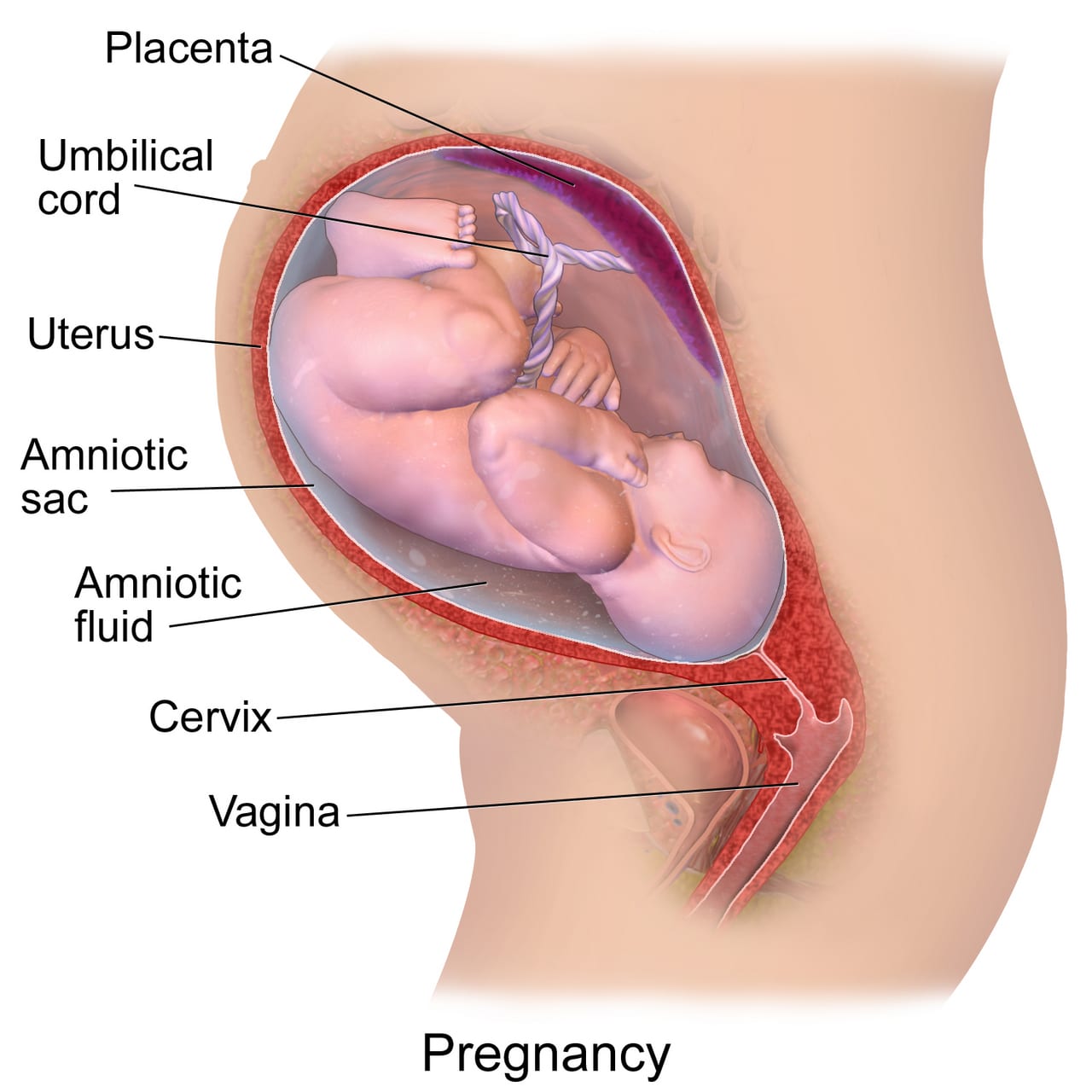
Most back pain in pregnancy is mechanical. The load on your lower back rises as the baby grows, the ligaments around your pelvis soften, and the muscles that hold you upright are asked to work harder in a shape they are not used to. It usually responds to sensible movement, and it is worth telling your midwife about.
The short version
- Back pain in pregnancy is common, and it gets more common as pregnancy goes on.
- One pooled review found 28% in the first trimester and 48% in the third.
- Exercise reduces how bad the pain gets. It does not stop it happening.
- Pelvic girdle pain is a separate problem with a different pattern.
- The NHS advises an urgent midwife call for back pain in later pregnancy.
What is actually changing
Three things shift at once, and they compound.
The first is load, and where it sits. The uterus grows forwards and down, which moves your centre of mass in front of your hips. The muscles running either side of your spine have to pull harder to keep you upright, and they are doing it for every hour you are on your feet, not only when you lift something.
The second is the abdominal wall. As it lengthens over the growing bump it becomes less effective at bracing the trunk. That job does not disappear. It gets handed to the back extensors and the hip muscles instead.
The third is connective tissue. The NHS describes the ligaments softening and stretching in preparation for labour, which puts strain on the joints of the lower back and pelvis.
The hormone usually blamed for that softening is relaxin, and the real picture is messier than the version you will read online. A study of 212 pregnant women measured serum relaxin and compared it against clinical testing. Higher relaxin was associated with a positive active straight leg raise, so it does appear to contribute to joint laxity. It showed no association with pain intensity or self-reported disability. Laxity and pain are different things, which is why "it is just your hormones" explains very little about why one woman is struggling and the next one is fine.
Trimester by trimester
A 2023 systematic review and meta-analysis pooled 28 studies covering 12,908 women and put the overall prevalence of back pain in pregnancy at 40.5%. Split by stage, it reported 28.3% in the first trimester, 36.8% in the second and 47.8% in the third. Heterogeneity between the studies was very high, so read these as a shape rather than as precise numbers. The shape is the useful bit. The further along you are, the more likely your back hurts.
First trimester
Mechanically, very little has changed yet. The bump is not loading anything. Back pain this early is usually a pre-existing problem that pregnancy has made louder, often because fatigue and nausea have cut your activity right down. If you had a grumbling low back before you conceived, this is the stage where it tends to speak up.
It is also the stage where the clinic team commonly sees people who have stopped exercising completely because somebody told them to be careful. NHS guidance points the other way: keep up your normal daily physical activity for as long as you feel comfortable, and avoid exhausting yourself rather than avoiding movement.
Second trimester
From roughly 13 weeks the bump starts to load the system properly, and the pain becomes recognisably pregnancy related. A band of ache across the low back that builds through the day, worse after standing, easier when you sit or lie down. Turning over in bed becomes an event.
This is also the stage where pelvic girdle pain typically shows up, and telling the two apart matters, because the advice differs.
Third trimester
Highest prevalence, and the least room to manoeuvre. Sleep gets broken, which lowers pain tolerance, which makes the following day harder. The abdominal wall is at its longest and contributing least to supporting the trunk.
Practically, the third trimester is about reducing sustained positions rather than chasing big improvements. Several short walks beat one long one. Sitting with the low back properly supported beats sinking into a soft sofa. The NHS advice to move your feet when you turn instead of twisting your spine, to wear flat shoes and to split shopping between two bags is unglamorous, and it works.
Back pain or pelvic girdle pain
These two get merged into one conversation and they should be kept apart. Pelvic girdle pain, sometimes called symphysis pubis dysfunction, is felt over the pubic bone at the front, across one or both sides of the lower back, in the area between the vagina and anus, or spreading into the thighs. The NHS lists the giveaway aggravators: walking, stairs, standing on one leg to get dressed, turning over in bed and moving your legs apart getting out of a car.
Lumbar back pain sits higher, tends to be a diffuse ache rather than a sharp catch, and is provoked by sustained postures and bending rather than by single-leg loading. If your pain fires when you put your weight on one leg, think pelvis. We have covered that separately in pelvic girdle pain in pregnancy.
What actually helps
Honest answer first. Exercise has the most evidence behind it, and the effect is on how bad the pain gets rather than on whether you get it at all.
A 2019 systematic review and meta-analysis in the British Journal of Sports Medicine pooled 32 studies covering 52,297 pregnant women. Prenatal exercise did not reduce the odds of developing low back or pelvic girdle pain, but did reduce pain severity during pregnancy and the early postnatal period, with a standardised mean difference of -1.03. The authors graded that evidence very low to moderate quality.
The Cochrane review of interventions for low back and pelvic pain in pregnancy, covering 34 randomised trials and 5,121 women, lands in a similar place. Land-based exercise reduced pain compared with usual antenatal care on low-quality evidence, and an eight to twelve week exercise programme reduced the number of women reporting combined low back and pelvic pain on moderate-quality evidence.
In plain terms: keep moving, expect it to take the edge off rather than settle it completely, and do not treat ongoing pain as a sign you have done something wrong.
The practical layer comes straight from NHS guidance. Bend your knees and keep your back straight when you lift. Avoid heavy objects. Move your feet rather than twisting. Wear flat shoes. Support your low back when sitting. Get proper rest later in pregnancy. Paracetamol is usually acceptable for back pain in pregnancy unless your GP or midwife has said otherwise, and you should follow the instructions on the packet.
When to call your midwife or GP
Read this part even if you skip the rest.
The NHS advises contacting your GP or midwife urgently if you have back pain and you are in your second or third trimester, because back pain at that stage can be a sign of early labour. The same applies if back pain comes with a fever, bleeding from your vagina or pain when you pee, or if you have pain in one or more of your sides under your ribs.
Call 999 or go to A&E if you have back pain and you lose feeling in one or both legs, your bottom or your genitals.
None of that is a reason to panic about ordinary end-of-day backache. It is a reason to mention new or changed back pain to your midwife rather than filing it under things you are supposed to put up with.
Where osteopathy fits
Modestly, and honestly. The Cochrane review reported moderate-quality evidence from individual studies that osteopathic manipulative treatment reduced low back pain and functional disability in pregnancy more than usual antenatal care, plus low-quality evidence that a combined approach of manual therapy, exercise and education reduced pain and disability. Where adverse effects were reported, they were minor and short-lived. That is a signal from single trials rather than a large pooled result, and it deserves to be read that way.
What our osteopaths actually do with a pregnant patient is mostly assessment and load management. Working out whether the problem is lumbar or pelvic. Adjusting how you sit, sleep, lift and move. Giving you a small number of exercises you will realistically do. Hands-on work is gentle, side-lying for most of it, and it supports the rest of the plan rather than being the plan.
The clinic team sees patients at every stage of pregnancy, and we work alongside your midwife rather than around them. An initial assessment is £75 and follow-ups are from £60. If your pain is severe, your midwife can also refer you to an obstetric physiotherapist through the hospital, and that route is worth asking about. You can read more about how we handle back pain treatment in Luton.
If this sounds like what you are dealing with, an assessment is the next step. Book online here.
Illustration: BruceBlaus, Blausen Medical, CC BY 3.0.