

Yes, heavy drinking slows recovery from a muscle injury, and the effect shows up in the lab within a day or two. A drink or two is a different question, and the research suggests a small dose probably makes little difference. How much you drink, how soon after the injury, and how fresh the injury is decide which side of that line you land on.
The short version
- A heavy session after hard exercise cuts muscle protein building, even with protein.
- Around 1 g of alcohol per kg of body weight deepened strength loss after muscle damage.
- Around 0.5 g per kg is unlikely to affect most aspects of recovery.
- The NHS advises avoiding alcohol for the first couple of days after a sprain.
- Drinking dulls pain, which makes it easy to overload a healing injury.
What heavy drinking does to muscle repair
Muscle heals and adapts by building new protein. In a 2014 crossover trial in PLoS One, eight active men did a hard session of weights and cycling, then drank 1.5 g of alcohol per kg of body weight, which the authors put at about 12 standard drinks. Compared with protein alone, the rate of muscle protein building over the next eight hours was 24% lower when the alcohol came with protein and 37% lower when it came with carbohydrate. Taking a protein shake with your pints softened the hit but did not cancel it.
A second study looked at strength rather than protein. In a 2010 trial in the Journal of Science and Medicine in Sport, eleven men damaged their thigh muscles with 300 hard lowering contractions, then drank either orange juice or vodka and orange at 1 g of alcohol per kg. For an 80 kg man that is about 80 g of alcohol, or 10 UK units at the NHS figure of 8 g per unit. Thirty-six hours later, peak strength had dropped by 12% to 28% after the juice and by 34% to 40% after the vodka. Soreness was the same either way, so the drinkers felt no worse but were measurably weaker.
Both studies are small, and lab muscle damage is a model of injury rather than a torn hamstring on a Sunday morning. Still, they point the same way, and the mechanism is plausible.
Is one or two drinks a problem?
Probably not, on current evidence. A 2014 review in Sports Medicine concluded that the effect depends on dose, timing, injury status and how soon you need to train again. Its practical line was that about 0.5 g of alcohol per kg of body weight is unlikely to affect most aspects of recovery. For an 80 kg person that is around 5 UK units, roughly two pints of ordinary-strength beer.
A 2017 study of eight young women found that 0.88 g per kg after muscle-damaging exercise did not change strength recovery over the following 60 hours. That study is small too, and it does not prove a bigger session is safe. What it does suggest is that the problem sits at the heavier end, which is where post-match drinking tends to go.
The first 48 hours after a sprain or strain
This is the window where restraint matters most. The NHS sprains and strains guidance advises avoiding heat, alcohol and massage for the first couple of days to help prevent swelling.
There is a practical problem as well. Drinking dulls pain. A 2017 meta-analysis in the Journal of Pain pooled 18 controlled studies and found that a blood alcohol level of about 0.08%, roughly three to four drinks, cut pain ratings by around 1.25 points on a 0 to 10 scale. Pain is the signal that tells you a fresh injury has had enough. Turn it down and it becomes easy to dance on a sprained ankle, carry heavy bags on a strained back, or wake up stiffer than you went to bed.
The same review warns that this pain relief may explain why some people with long-term pain drink more over time. If you notice you are drinking to get through the pain, that is worth raising with a GP.
Sleep, the recovery window you lose without noticing
A nightcap helps some people drop off, and that part is real. A 2013 review of sleep studies in healthy volunteers found that alcohol shortens the time it takes to fall asleep at every dose, then disrupts the second half of the night. At moderate and higher doses it also reduces REM sleep across the night. You wake up having spent the hours in bed, without getting the full benefit of them.
If surgery is coming up
For anyone heading towards an operation on a joint or tendon, regular heavy drinking carries more weight. A 2013 meta-analysis of 55 studies in the Annals of Surgery linked drinking before surgery with more general complications, infections, wound problems and longer hospital stays. Low to moderate drinking did not show a clear link, though few studies looked at it. If you drink heavily and have a date for surgery, tell the surgical team honestly. It changes how they plan your care.
When to get help
Most of this is about speed of recovery. A few situations are about safety:
- If you hit your head while drinking, the NHS head injury guidance says to get help from NHS 111, and to call 999 for serious signs such as being knocked out and not waking, a fit, or being unable to stay awake.
- If an injured area is numb or tingling, looks blue or grey, is cold to touch, or has changed shape, the NHS says call 999 or go to A&E. If you cannot put any weight on it, contact NHS 111.
- If you drink heavily every day and want to stop, the NHS alcohol support page warns that stopping overnight could be harmful. Speak to a GP first.
For everyday drinking, the NHS low-risk guideline is no more than 14 units a week, spread over three or more days, with several drink-free days.
What we suggest to patients in rehab
Skip alcohol for the first couple of days after a fresh sprain or strain. After that, a drink or two is unlikely to undo your rehab, but a heavy session the night after a hard training block or a big rehab day is working against you. Keep the heavy nights away from the days your tissue is doing the most repair, and keep the protein and sleep in place either way.
If an injury is not settling the way you expected, our sports injury clinic in Luton can assess what is going on and build a plan around your training and your life. If this sounds like what you're dealing with, an assessment is the next step. Book online here.
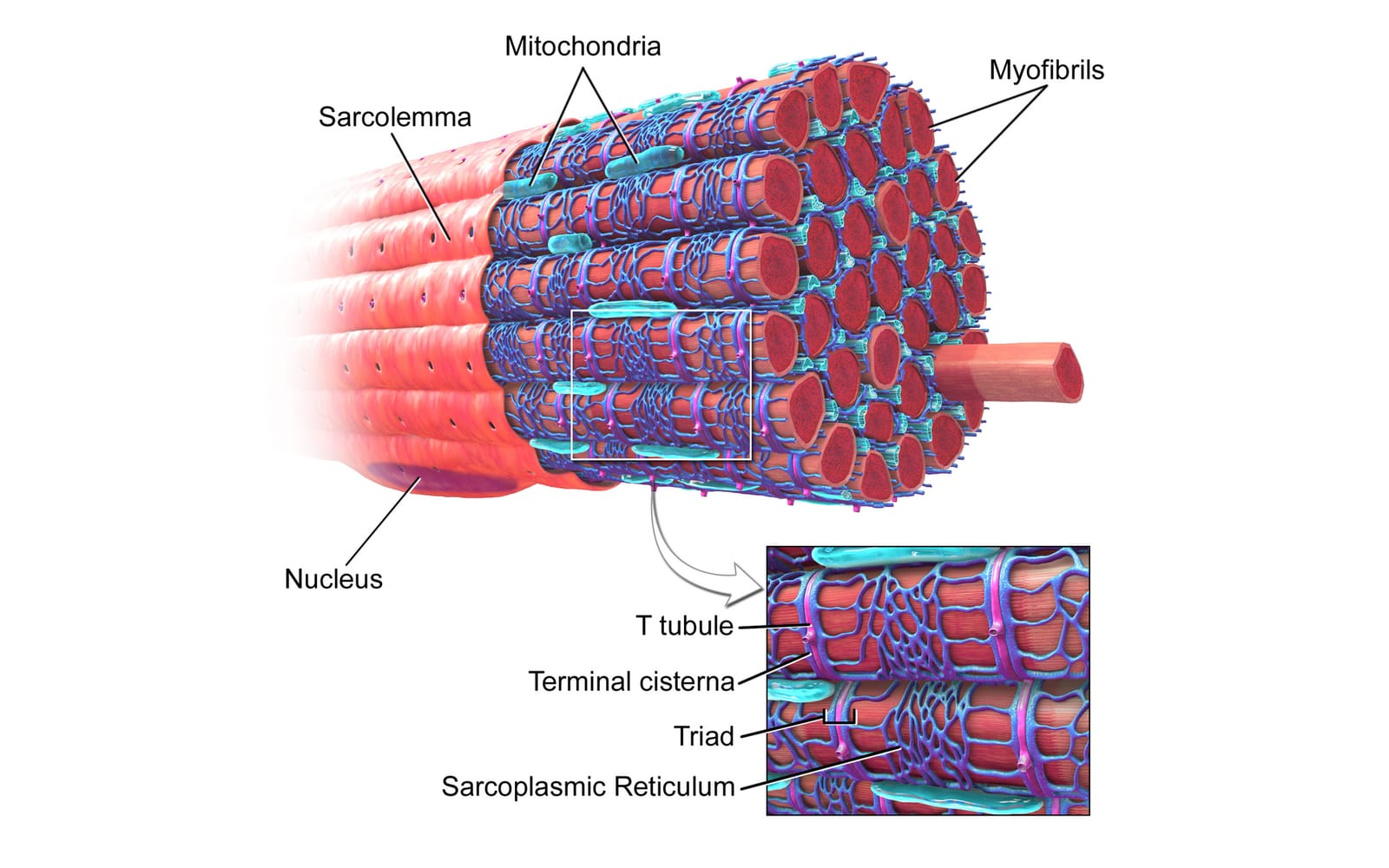
Illustration: BruceBlaus, Blausen Medical, CC BY 3.0, via Wikimedia Commons.