

Chronic pain is pain that persists or recurs for more than three months. Anything shorter is acute. That 12-week line comes from the NICE chronic pain guideline and the IASP classification written for the World Health Organization's ICD-11, and it is a measure of time. On its own it says nothing about how much tissue damage is present or whether the pain will last.
That matters, because plenty of people reach the three-month mark, hear the word "chronic" and assume the door has closed. The research on how pain recovers says something more useful, and what you do on either side of the line changes.
The short version
- Chronic pain means pain lasting or recurring for more than three months.
- The label describes duration only, with no verdict on damage or permanence.
- Acute low back pain improves fastest in the first six weeks.
- Recovery slows after six weeks but usually keeps going.
- For chronic pain, NICE recommends exercise and psychological therapy over most painkillers.
Where the 12-week line comes from
The three-month cut-off is a convention, agreed so that doctors, researchers and guideline writers all mean the same thing when they say "chronic". The working group that wrote the chronic pain codes for ICD-11 defined it as pain that persists or recurs for more than three months, and then split it into two groups.
Chronic primary pain is pain where no underlying condition adequately accounts for the pain or its impact. Non-specific low back pain and fibromyalgia are the classic examples. Chronic secondary pain starts as a symptom of something else, such as arthritis, nerve damage or surgery. NICE uses the same definitions and notes that the two can exist together, and that other names for the same thing include persistent pain and long-term pain.
Nothing biological switches over on day 91. Your tissues do not know what the calendar says. The line exists because pain that has hung around for months tends to behave differently from a fresh injury, and it tends to need a different plan.
It is also very common. A 2016 BMJ Open review of UK population studies estimated that chronic pain affects between a third and a half of UK adults, just under 28 million people. The same review put moderate to severely disabling chronic pain at 10.4% to 14.3%. So most people living with chronic pain are getting on with their lives around it, and only a minority are badly limited by it.
What the recovery curve actually looks like
Low back pain is the best-studied example, so it gives the clearest picture of how pain behaves over time. A 2012 meta-analysis in the Canadian Medical Association Journal pooled 33 cohorts covering 11,166 people and tracked their pain scores out of 100.
For people who enrolled with acute back pain, the average score went from 52 at the start to 23 at six weeks, 12 at six months and 6 at one year. For people who enrolled with pain that was already persistent, it went from 51 to 33 at six weeks, 26 at six months and 23 at a year.
Three things stand out. The steepest improvement happens in the first six weeks, in both groups. After that, improvement slows but keeps going. And the persistent group still improved by around a third in those first six weeks of the study, which is a long way from "nothing can be done". The authors also found low to moderate pain still present at a year, especially in the persistent group, so it is fair to say recovery is often partial rather than complete.
This is back pain data, so treat it as a guide for other areas rather than a rule. The NHS back pain page puts it the same way in plain terms: back pain usually improves within a few weeks, but it can sometimes last longer or keep coming back.
What makes acute pain more likely to become chronic
This is where the honest answer is less tidy than people would like. A systematic review in Family Practice looked at 23 papers on psychological and social factors in the move from acute to chronic low back pain. Depression, psychological distress, passive coping and fear-avoidance beliefs were sometimes linked with a worse outcome. Most social and work factors were not.
The factor most consistently linked with how things actually turned out was the patient's own expectation, or the clinician's, that the pain would persist. The authors were also clear that few independent risk factors have been proven, and that trials aimed at changing them had shown little effect on prognosis. So these are warning signs worth noticing, and none of them is a sentence.
Where the evidence is more practical is in sorting people early. The STarT Back trial in The Lancet randomised 851 patients from ten GP practices in England. Matching the level of care to each person's risk of a poor outcome improved disability scores at four months and at twelve months compared with standard best practice, and cost less. The effect was modest, but it was real. NICE guideline NG59 now suggests considering a risk tool like this at the first appointment for each new episode of low back pain, with reassurance, advice to keep active and self-management for people likely to recover quickly, and more intensive support such as exercise programmes, with or without manual therapy, for people at higher risk.
What changes once pain is chronic
For chronic primary pain, the NICE NG193 recommendations lean heavily towards active approaches. NICE says to offer a supervised group exercise programme, and to consider acceptance and commitment therapy or cognitive behavioural therapy for pain. It also allows a single, limited course of acupuncture in certain settings, and some antidepressants can be considered, which is a conversation for your GP.
Just as telling is what NICE advises against starting for chronic primary pain: paracetamol, anti-inflammatories such as ibuprofen, opioids and gabapentinoids, among others. In other words, medicines that can help for a few days after an injury are not recommended as the long-term plan for this kind of pain. Chronic secondary pain, such as arthritis, follows the guidance for that condition.
Hands-on treatment fits around this rather than replacing it. NICE NG59 supports manual therapy for low back pain only as part of a package that includes exercise. In my years of practice that matched what I saw: treatment can ease movement in the short term, and the lasting change comes from what the patient builds on top of it. That is why our osteopaths pair treatment with a home exercise plan from the first appointment.
If chronic pain is your situation, our post on central sensitisation covers what is happening in the nervous system when pain outlasts the original injury.
What to do in the first 12 weeks
The early weeks are where the recovery curve is steepest, so they are worth using well. The basics are simple and backed by the NHS guidance on back pain:
- Stay active and keep doing as much of your normal day as you can.
- Build back into exercise and heavier jobs gradually rather than waiting for zero pain.
- Notice your own expectations. If you are convinced it will never get better, that belief is worth talking through with a clinician.
- Get assessed if it has not improved after a few weeks of looking after it at home, or if it is stopping you doing your day-to-day activities.
For back pain specifically, our back pain treatment page sets out how the clinic team approaches assessment and rehab.
When to see a GP urgently
Most pain, acute or chronic, is not dangerous. A small number of symptoms need checking quickly. Using back pain as the example, the NHS says to ask for an urgent GP appointment or call 111 if you feel hot, cold, shivery or generally unwell, or if severe pain starts suddenly or gets worse quickly.
Call 999 or go to A&E if back pain comes with pain, tingling, weakness or numbness in both legs, loss of feeling around the genitals or anus, changes in bladder or bowel control, chest pain, or if it started after a serious accident. See a GP if pain is worse at night, if you have lost weight without trying, or if there is a lump or swelling in your back. Any pain that changes character, or comes with new weakness in a limb, should be checked before you carry on managing it yourself.
An initial consultation at the clinic is £75 for 45 minutes, covering a full history, examination, a clear explanation of what is going on, your first treatment and a home exercise plan.
If this sounds like what you're dealing with, an assessment is the next step. Book online here.
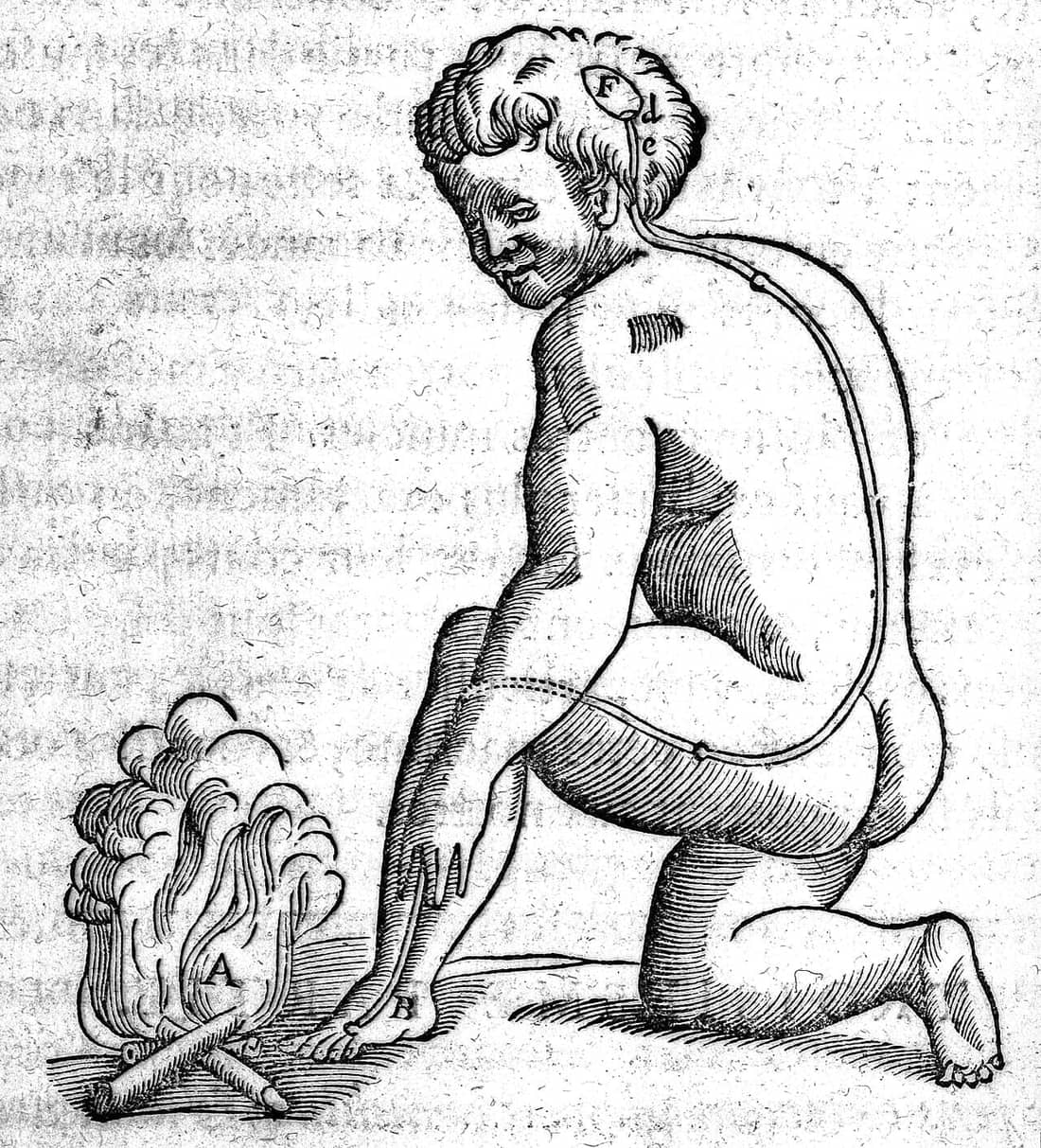
Illustration: Descartes, the path of burning pain, Wellcome Collection, CC BY 4.0, via Wikimedia Commons.