


What is sciatica?
Simply put Sciatica is pain into the posterior (back of) thigh and leg caused by chemical (inflammation) or mechanical (compression) irritation of the sciatic nerve (or nerve roots) which form the sciatic nerve.
What are the symptoms?
Band like, electric shooting pain into the back of the thigh, leg and into the foot. The medical term for this pain is radicular pain. You may often also experience areas of numbness/tingling/altered sensation (usually in the leg and foot) , muscle fasciculations (little twitches in muscles), and weakness in the muscles of the leg supplied by the sciatic nerve.
Despite the common belief, sciatica is not lower back pain. However it is common to experience some discomfort or pain in your lower back when suffering with sciatica.If you are experiencing local lower back pain with the occasional sharp twinge into your buttocks this is not sciatica.
Why does it happen?
The sciatic nerve is made up of nerve roots from spinal segments L4 – S3. These nerve roots leave the spine in close proximity to the discs and spinal facet joints.Commonly it is not actually the sciatic nerve itself which becomes irritated but a nerve root which supplies the nerve (normally L5, S1). There are lots of different causes to why these nerve roots may become irritated causing your sciatica.
The most common cause is a posterolateral (backwards and sideways) disc bulge in the lower part of your back causing compression or irritation of the spinal nerve roots. Typically with this type of sciatica you will experience band like pain across the base of your lower back along with your leg and thigh symptoms.
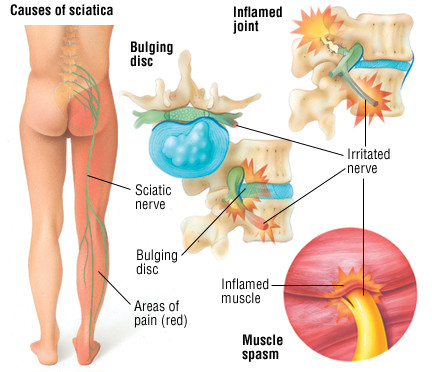
Other common causes of sciatica are facet joint hypertrophy (which can occur with age related changes) and piriformis syndrome. For a full examination and diagnosis of what is causing your sciatic type pain please consult a trained medical professional for example an osteopath.
How long will it last?
Sciatica commonly lasts between 6-12 weeks and most people with sciatica tend to have future episodes of pain. This of course varies between individuals and can be decreased with effective care. Sciatica is managed very well with conservative treatment for example osteopathy or physiotherapy. In the early stages pain relief prescribed by your GP may help you feel more comfortable whilst sleeping and manage your symptoms a little.
Occasionally surgery is needed but a period of modified activity and conservative treatment is always recommended and beneficial for most.
What can I do to manage my pain by myself?
It is very difficult to give broad recommendations for those suffering with sciatica as each patient is an individual and management for the different causes can be quite different.
However here are some key pointers which may help:
- Avoid the activites which aggravate your pain the most.
- Avoid prolonged periods of sedentary behaviour – Your back is designed to move and if you can find a comfortable way to do so this will be benefical for your recovery.
- Trial both heat and ice on your lower back and buttocks. Apply for 15 minutes at a time, making sure the temperature is not too extreme to prevent skin damage. Which ever one helps stick with it.
- Seek the advice of a trained professional if in doubt.
What shall I be on the look out for?
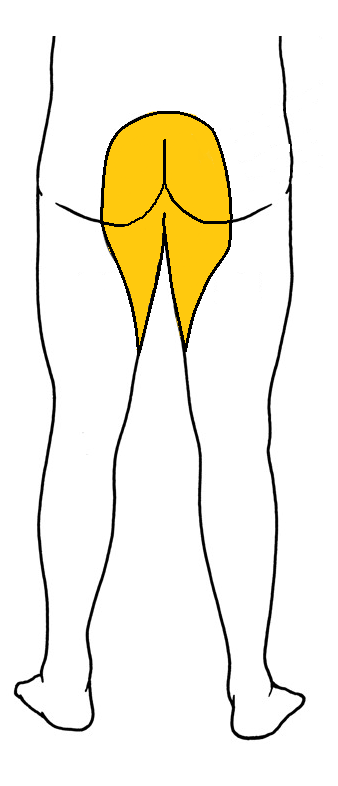 There are some symptoms which may be associated with your sciatica which require urgent care. Please report to your local A and E department immediately if you begin to experience any of the below symptoms:
- Urinary Retention and overflow incontinence – If you are not able to voluntarily empty you bladder then the nerves which supply this area may be in trouble. Seek urgent care.
- Saddle parasthesia/anasthesia – If you notice changed/altered/lack of sensation in the area where you would normally sit on the saddle of a bike , seek care immediately.
- Foecal Incontinence – If you lose the ability to control passing of stools then immediate care is needed.
- A combination of all three is what we call in the medical professions “Cauda Equina Syndrome“. This is a medical emergency. Please take appropriate action.
Key take home points
Sciatica can be extremely painful and daunting. Bouts of sciatica commonly last between 6 – 12 weeks and most people will have at least one recurrence in their lives. Sciatica is managed very well with lifestyle modification and conservative treatment from a trained medical professional.
If you experience any “cauda equina syndrome” symptoms please seek urgent care in your local A and E department.
Suffer with lower back pain? Education is knowledge, and knowledge is power.
“The direction in which education starts a man will determine his future”
Plato 427-347 BC