

The human frame was never designed to be based at a desk for 8 plus hours a day. Despite lack of design many of us, including myself spend long periods of time seated behind a desk staring at a computer screen. This is not optimal for your shoulder, neck, back or hip health but let’s face it, most of us have to work, therefore most of us don’t have much choice.
In this article I will break down a common cause of desk based shoulder pain and provide you with some strategies to combat that pain in super quick time! If you suffer with shoulder pain and are starting to get fed up with it I think it is best you read on.…….
SHOULDER PAIN
The shoulder joint is a very complex joint which due to its shape and shallow socket, relies heavily on its muscular surroundings for stability. For this reason even small changes in tension across the muscular can have dramatic effects on the shoulder pain you feel. But just because this joint is complex, treating it does not have to be complicated.
Why is my desk set up hurting my shoulder?
Think hard about which shoulder gives you the most grief. The one that aches the most, gives you the most shoulder pain, the one that you are continuously pressing into for relief, the one that you are tirelessly stretching to find comfort, the one that is a pain to lie on at night. Right now put your best poker face on.
And let me guess which one it is…… Don’t give anything away……..straight face…….no smurking. I predict, with all my might, that the shoulder which hurts in the same arm as your mouse hand.
Am I right? Of course I am ; ) If I am make sure you leave a comment at the bottom to let me know. If I am wrong also leave a comment. This shoulder pain I refer to is caused by what I like to call “Mousehand posture”. This term is completely made up by me. You won’t see it in any text book and certainly would not learn about it in an anatomy class. The term, however, is a very fitting way of describing the issue.
WHAT IS MOUSEHAND POSTURE?
When working at a desk we spend large periods of time in prolonged and static positions. Being in static positions for periods of time cause certain muscles to get strong and tight and other muscles to weaken. Mouse hand posture occurs as the direct result of spending prolonged periods of time in the seated position with your hand on the mouse.
You may feel like you move you mouse hand a lot and I would say that you probably do to a certain degree but how much of this movement actually translates into the shoulder? I would guess, actually, very little.
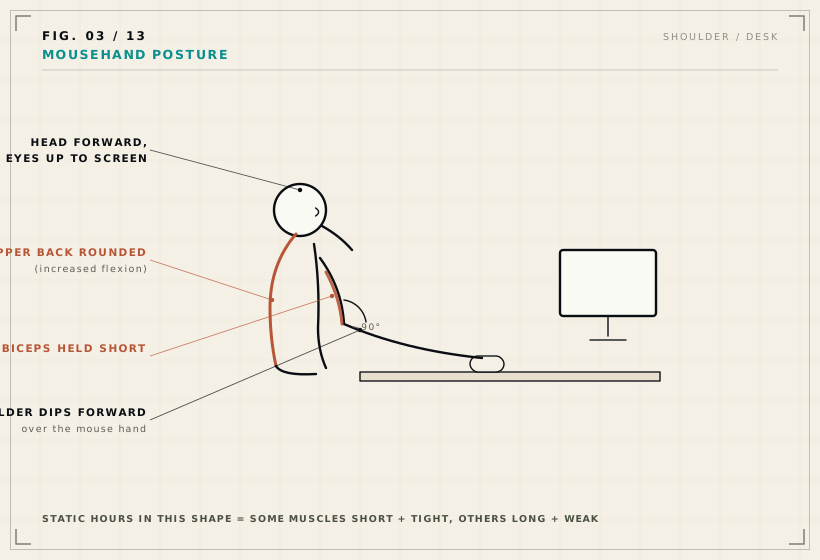
Mouse hand posture occurs from spending time in the following position ; Elbow bent at roughly 90 degrees, biceps muscle held shortened, increased flexion (bending forward) through the upper back. Head head forward leaning towards the screen and looking slightly up. But what is the result of spending so much time in this posture?
The typical mouse hand posture with your shoulder which appears like it is dipped forward slightly, slight winging of the shoulder blade in the back and hand slightly turned inward.
Does it matter?
Well kind of. Posture is certainly not the be all and end all in this conversation. For me posture matters when it matters. So when does it matter? Well it matters when you are in pain.
But what does the research say about posture? The research it quite clear in suggesting that posture in itself is not a predictive factor of pain nor health. Long gone are the days where osteopaths and other therapists work from a purely postural model. Pain in a lot more complex than that. That being said posture does matter when you are in pain. It actually matters a lot more than most give credit for.
It matters most for one very large reason. Posture effects function.
With poor posture comes poor function. With poor function comes pain. So does everyone with poor function have pain? No but key literature suggests that pain and decreased function are highly inter-related and go hand in hand. So the important question is this, I suppose…… What can I do to correct my shoulder posture, in order to improve my function and ultimately decrease my pain?
Let’s dive in…….
STRETCHING
A recent study showed that incorporating stretching into your daily routine twice a day, for 5 days a week is a highly effective strategy for decreasing shoulder pain and neck pain in office workers. Here are my 3 favourite stretches for starting to address the mousehand posture and in turn, decrease your shoulder pain.
There is no literature to detail the best stretching protocol. However through trial and error I have found this method of stretching to be most effective for my patients.
Take each stretch to a point when you only first begin to feel the stretch. The first sign of a pull. Hold the stretch in that position taking it no further until you can not feel the stretch sensation anymore. Once the sensation has gone, take the stretch a little further until you begin to feel the stretch again. This time around you should have a little more range in your stretch but the stretch sensation should be no different to the first stretch sensation you felt. Repeat this one more time and then move onto the other arm and/or a different stretch.
The key to this type of static stretch is to not over stretch the muscles. Over stretching the muscles will lead to activation of the muscle spindles (stretch receptors) in the muscle. If this muscle spindles are activated it will lead to a reflex contraction of the muscle. Contracted muscles are shortened muscles. Our aim is to lengthen not shorten so go easy with the stretching.
I dare you to do all 3 stretches in series twice a day, 5 x each week and see how your shoulder feels. I predict it may just be a little more happy.
BICEPS STRETCH
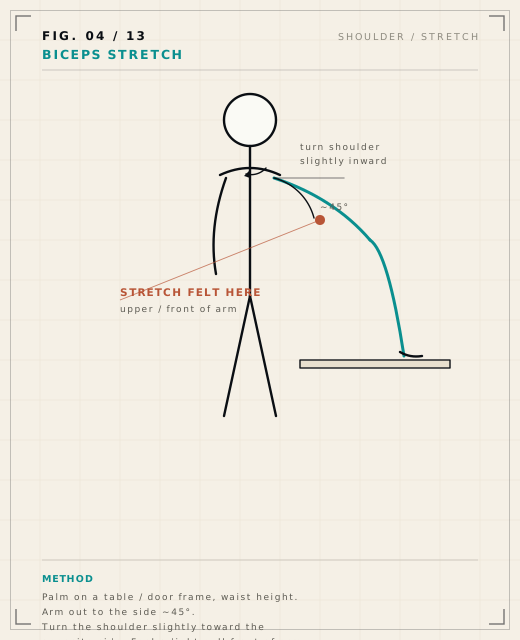
Find a static object (table, door frame, chair) just above waist height in which you can rest the palm of your hand on and hold your arm out to the side at about 45 degrees. Turn the shoulder (of the bicep you are stretching) a little towards the the opposite shoulder. You should feel a slight pull in the upper/front part of your arm.
PEC STRETCH
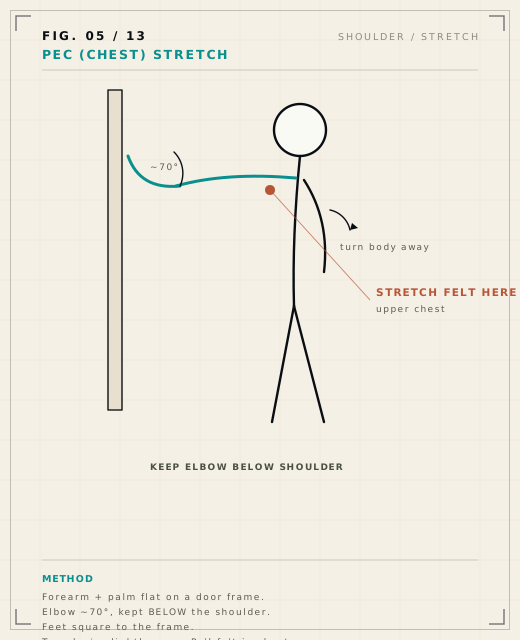
Rest the palm of your hand and elbow on a door frame with the angle between your shoulder and elbow at around 70 degrees. Position your feet so that at 90 degrees to the door frame. Once in position turn your body slightly bringing the shoulder you are stretching slightly towards the opposite shoulder. You should feel a slight pull in your upper chest region. The key to this stretch is to make sure your elbow is below your shoulder at all times.
SCALENE STRETCH
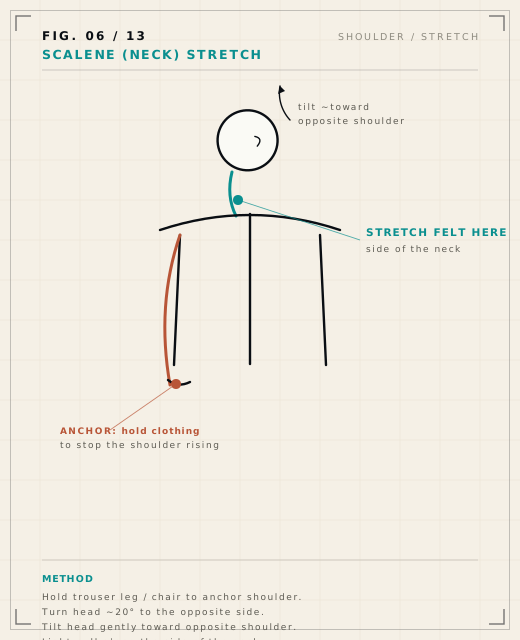
In the standing position grab hold of your trouser leg/dress/clothing. This is to prevent your shoulder from moving whilst you are stretching your scalenes. Turn you head about 20 degrees to the opposite shoulder and then lean your head slightly towards the opposite shoulder and hold. You should feel a slight pull on the muscles of the neck in which your grabbing hold of your trouser leg. This stretch can also be done seated by grabbing hold of the chair instead of your clothing.
Okay so now we have some good stretches, what else do you need to decrease your shoulder pain at work?
A guide to setting up your desk correctly might be a start. A proper ergonomic desk set up will help mitigate some of the potential problems which can occur from bad postures at work. I know you probably don’t have much choice about sitting so if we are going to sit at work we might as well sit in the best way possible.
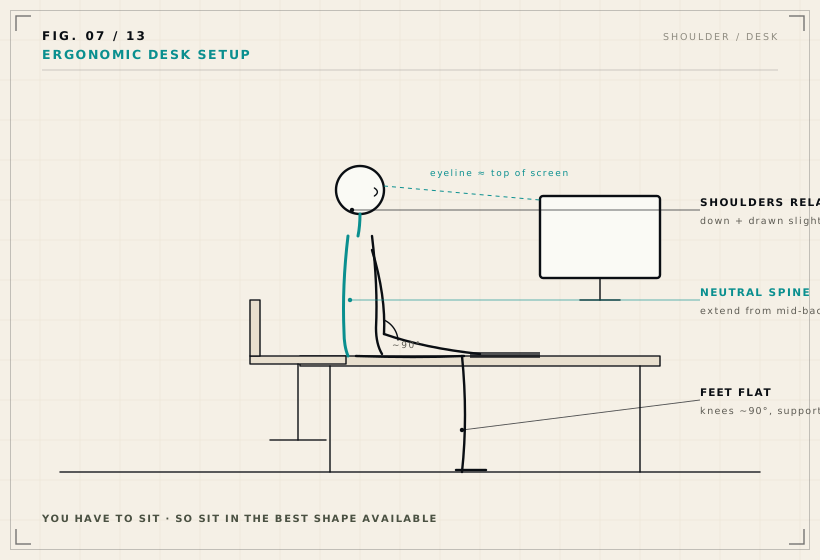
There is a lot to take in from this diagram so let’s focus on the key points relating to shoulder pain.
1)Let’s talk shoulder position. Your shoulders shoulder be as relaxed as possible. Do your best to stop them from elevating (lifting towards your ears). Draw your shoulders back slightly to open up the front of your chest.
2)Attempt to sit with a neutral spinal alignment. For most of us this means making the conscious effort to sit up. This sounds silly but there is actually a right and wrong way to sit up. The key is to not over arch through your lower back in an attempt to sit up straight. This is not optimal for your lower back health. Instead it is more beneficial to extend back slightly from higher up in your back. At first this may feel a little tricky. For someone who is not used to this, you can hack this position by engaging your abs to prevent your lower back from arching when attempting to sit up straight.
An extension exercise (designed to treat back pain, but also very effective for improving work position) really helps with this process.
So there you have it. I won’t over load you with much more for today. You already have enough to be getting on with. Before I leave you to it I want to ask you to do yourself a favour.
Take some action and do the exercises you have read about today. You have nothing to lose and everything to gain. There is no longer a need to walk around with shoulder pain. Don’t be lazy!
If you have some friends that suffer with work related shoulder pain, why not do them a favour and share this with them. They will love you for it!
Happy Wednesday Team!
Catch you soon