

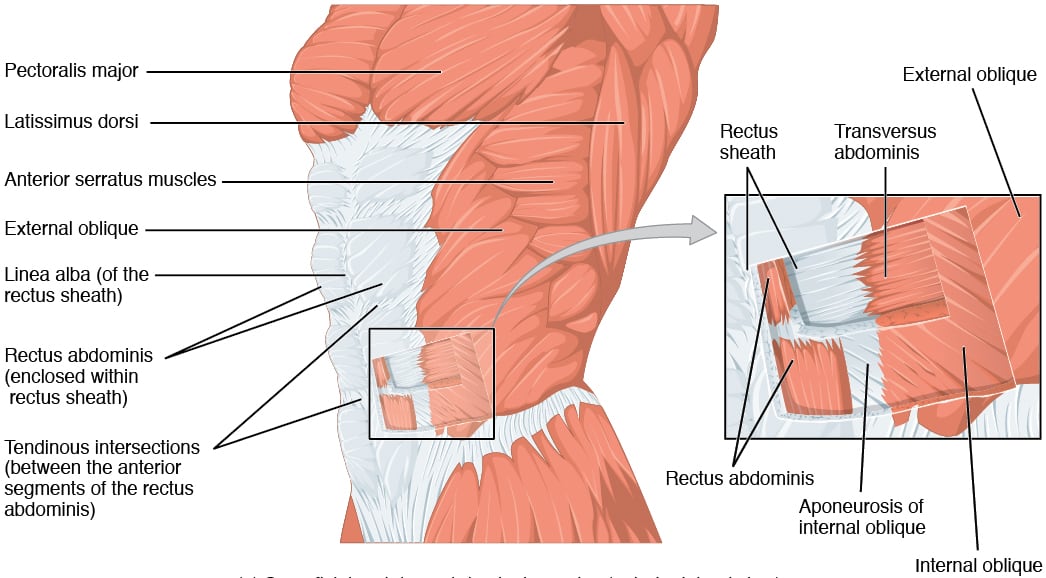
Postnatal recovery is not one process on one timeline. It is four running at once: the abdominal wall, the pelvic floor, the pelvis and the soft tissue around it, and a completely new pattern of lifting, carrying and feeding a baby. Most of the visible healing is done by around 12 weeks. The strength and control underneath it take longer, and they respond to gradual loading rather than to rest.
The short version
- Postnatal recovery runs on four separate clocks, not one.
- Abdominal separation is normal in pregnancy and usually narrows by about eight weeks.
- Around a third of women leak urine after childbirth.
- Pelvic floor muscle training treats leaking better than waiting does.
- The six to eight week check is a starting point, not a discharge.
The four clocks of postnatal recovery
The first clock is wound healing. A perineal tear, an episiotomy or a caesarean wound heals on a fairly predictable schedule. The NHS advice after a caesarean section is one to two days in hospital, non-dissolvable stitches or staples out at five to seven days, and several weeks of taking things gently. Most people track this clock closely, because it is the one with a visible wound attached.
The second is connective tissue. Pregnancy changes the mechanical behaviour of ligaments and fascia, and how quickly that settles varies a lot between individuals. Anyone who gives you a precise date for this is guessing. What is fair to say is that stiffness, a feeling of instability through the pelvis, or a back that fatigues faster than it used to are common in the first few months and usually improve.
The third is muscle strength and control: the abdominal wall, the pelvic floor and the hips. This clock does not run on its own. It runs when you load it. Left alone, it can sit unchanged for a year.
The fourth is the one nobody warns you about, and it is the only one that gets heavier over time. A newborn weighs three or four kilos. At six months it is closer to eight, and you are lifting it out of a cot forty times a day, in and out of a car seat, and holding it on one hip while you do something else with the other hand. That is a genuine training load applied to a body that has not trained for it.
The abdominal wall: what diastasis recti really means
During pregnancy the two muscle bellies that run down the front of the abdomen separate at the midline. The NHS describes this as common, usually around two finger widths, caused by the growing womb pushing the muscles apart. It usually goes back to normal by the time the baby is about eight weeks old. You can check it yourself by lying on your back with knees bent, lifting your shoulders slightly off the floor, and feeling between the edges of the muscles above and below the belly button.
The numbers from research are worth knowing, because they reframe the whole thing. A prospective study of 300 first-time mothers, published in the British Journal of Sports Medicine, found separation in 60% of women at six weeks after birth, 45.4% at six months and 32.6% at twelve months. So it is extremely common early, and roughly a third of women still have some separation a year later.
Here is the part that changes how we treat it. In that same study, women with and without separation reported the same amount of low back and pelvic pain at twelve months. The gap on its own did not predict pain. The same study found that women reporting heavy lifting twenty or more times a week were more likely to have a separation, which is a load story, not a healing-failure story.
The clinical read is straightforward. A finger-width measurement is not a diagnosis. What matters is whether the abdominal wall can generate tension and transfer force when you lift, twist and carry. Chasing the gap closed with endless measuring tends to make people anxious and does not obviously help. Building a wall that works under load does.
The pelvic floor: the part most often left to sort itself out
About one in three women have urinary incontinence and up to one in ten have faecal incontinence after childbirth. That figure comes from the 2020 Cochrane review of pelvic floor muscle training, which pooled 46 trials involving 10,832 women across 21 countries. It is one of the better-evidenced areas in the whole of musculoskeletal care, and the finding is consistent: training the pelvic floor works better than not training it, for both preventing and treating incontinence.
The NHS is clear that leaking a little urine when you laugh, cough or move suddenly is quite common after having a baby, that pelvic floor exercises can help, and that you should tell the GP at your postnatal check if they are not helping, because you can be referred to a physiotherapist. NICE guideline NG194 puts information about pelvic floor exercises into the set of things every woman should be given before she is transferred from the maternity unit to community care, and there is a separate NICE guideline, NG210, covering prevention and non-surgical management of pelvic floor dysfunction.
Common and normal are not the same word. Leaking at six weeks is common. Leaking at six months is a treatable problem that has been left. If that is your main symptom, or if you have a heavy dragging feeling, or pain with sex, ask your GP about a referral to a specialist pelvic health physiotherapist. That is their field, and they are good at it.
Back, neck and wrists: the load that comes from the baby, not the birth
The clinic team commonly sees three patterns in new parents, and none of them are caused by the birth itself.
The first is neck and upper back pain from feeding position. Forty minutes of looking down at a baby, six or eight times a day, with the shoulders rolled forward and no support under the elbows. The fix is unglamorous: bring the baby up to you with pillows or a cushion under the arm rather than folding down to the baby, and alternate which side you lead with.
The second is pain on the thumb side of the wrist and forearm. It is a recognised pattern in new parents and it comes from the specific grip used to lift a baby under the armpits with the thumbs extended, repeated dozens of times a day. Changing the lift to a scoop with the whole hand, and reducing one-handed carrying, usually takes the irritation off.
The third is low back pain from bending. Cot sides, car seats, baths and floor play all pull you into repeated forward bending, often while holding weight out in front of you. A car seat with a baby in it is an awkward load held at arm's length, which is close to the worst possible lifting position. Get the seat as close to your body as you can before you take the weight, and turn your feet rather than twisting your spine.
These are ordinary mechanical problems with ordinary mechanical answers. They are also the ones most likely to be dismissed, because a new parent expects to feel wrecked and assumes it is all part of it. Some of it is. Persistent one-sided pain that is getting worse over weeks is not.
A sane way back to exercise
For the first six weeks, the job is walking, breathing and gentle pelvic floor work. The NHS caesarean advice is to stay mobile and do gentle activity such as a daily walk, which is sound after a vaginal birth too. Nothing here should be uncomfortable.
Between six and twelve weeks, after your six to eight week postnatal check, you can start adding graded strength work. Sit-to-stands, a hip hinge with a light weight, suitcase carries, band rows, and pelvic floor training that is actually progressed rather than repeated at the same easy level forever. Load is the stimulus. Comfortable repetition of something you can already do is not.
From about twelve weeks the target is the same as for any other adult: the NHS recommends 150 minutes of moderate intensity activity a week plus strengthening activities that work all the major muscle groups on at least two days a week. Getting there in stages over a couple of months is a good outcome, not a slow one.
Running is the one people rush. It is a repeated impact load through a pelvic floor that has been under sustained pressure for nine months. In our clinical experience, going back to running while you are still leaking, or while you feel heaviness in the pelvis, tends to entrench the problem rather than train it away. If either of those shows up when you start, that is information worth acting on, not something to run through.
When to stop and get seen
Most postnatal aches are mechanical and settle. A few things are not, and they need same-day attention rather than a physiotherapy appointment.
Call 999 or go to A and E if back pain comes with pain, tingling, weakness or numbness in both legs, a loss of feeling around the genitals or anus, or changes to bladder or bowel control. New difficulty passing urine, or leaking without any sensation of needing to go, is in that category and is not the same thing as stress incontinence.
Get urgent advice from a GP or NHS 111 if you have throbbing pain or swelling in one calf or thigh, which can be a sign of a deep vein thrombosis. Call 999 if that comes with chest pain or breathlessness. Pregnancy and the weeks after birth raise clot risk, so calf pain in this window is not something to watch for a few days.
Tell your midwife if you are losing blood in large clots. Ask for an urgent GP appointment if back pain comes with feeling hot, cold, shivery or generally unwell, or if it is severe pain that started suddenly or is getting worse quickly.
Where hands-on treatment fits
I want to be straight about the evidence here. The strongest research in the postnatal space supports pelvic floor muscle training and graded loading. It does not support manual therapy as the main event, and I am not going to pretend otherwise. What hands-on work does well is make movement more comfortable and less guarded while the loading programme does the structural job, and it gives you someone to assess the thing properly in the first place.
In my years of practice, the most useful part of a postnatal appointment was usually not the treatment. It was working out which of the four clocks was actually the problem, deciding whether anything needed a GP or a specialist pelvic health referral, and then writing a loading plan that fitted around a person who was not sleeping. That is still how the clinic team approaches it. Most of what we do here sits in exercise rehabilitation, with hands-on work supporting it, and the same applies to the back pain that so often turns up around month three.
An initial assessment is £75. You do not need a GP referral.
If this sounds like what you are dealing with, an assessment is the next step. Book online here.
Illustration: OpenStax College, CC BY 3.0.