

Placebo and nocebo are the two directions expectation can push pain. Placebo is relief produced by the context around a treatment rather than by the treatment itself. Nocebo is the reverse, where negative expectation makes pain and symptoms worse. Both produce measurable changes, and neither one means your pain is imaginary.
This matters if you are paying someone to treat you, because it is the part of the process almost nobody explains. Understanding it makes you a harder patient to mislead, including by me.
The short version
- Placebo is relief driven by expectation and context, not the active ingredient.
- Nocebo is the reverse: negative expectation making pain and symptoms worse.
- Both produce real, measurable changes in how much pain people report.
- Placebo effects on pain are modest and highly variable, not miracle-sized.
- What a clinician says about your body can help you or harm you.
What placebo actually means
A placebo is an inert treatment. A sugar pill, a needle that never pierces the skin, a machine that is switched off. The placebo effect is the change that follows anyway, and it comes from everything wrapped around the treatment rather than from the treatment itself.
A 2018 review in BMC Musculoskeletal Disorders set out what those wrappings are in musculoskeletal care: your expectation and previous history, the clinician's behaviour, beliefs and verbal suggestions, therapeutic touch, the ritual of treatment, and the setting itself. The authors describe a positive context as one that reduces pain by producing placebo effects, and a negative context as one that aggravates pain by creating nocebo effects.
The common misreading is that a placebo response means the pain was imaginary, or that the patient was gullible. That is wrong on the biology. All pain is produced by the nervous system weighing signals from the tissue against context, memory and expectation. Placebo effects work on the same machinery that produces every other pain experience you have had, including the pain from a broken bone.
How big the placebo effect on pain really is
Here the honest answer is less exciting than the popular one. The most rigorous attempt to measure it is a Cochrane review by Hrobjartsson and Gotzsche covering 202 trials across 60 clinical conditions, in which people were randomised either to a placebo or to no treatment at all. That second comparison is the important one, because a large part of what looks like a placebo effect in an ordinary trial is simply conditions improving on their own.
Their overall conclusion was that placebo interventions do not have important clinical effects in general. On pain specifically they found a standardised mean difference of -0.28 (95% CI -0.36 to -0.19) in favour of placebo, which is a small effect, and they flagged that the effect on pain was very variable even among the trials at low risk of bias. Physical placebos, such as sham acupuncture and sham hands-on procedures, produced larger effects than dummy pills.
So placebo is neither powerless nor a substitute for treatment that works. It is a small, unreliable, context-dependent effect that gets bigger as the ritual gets more physical and more impressive. Anyone selling you a placebo-sized result at a premium price is selling you the ritual.
Placebos work even when you know they are placebos
This is the finding that surprises people most. In open-label placebo trials, patients are told plainly that what they are being given is inert, and a proportion of them still improve.
A 2025 systematic review and meta-analysis in Scientific Reports pooled seven randomised trials covering 703 people with chronic musculoskeletal pain, five on back pain and two on knee pain. Compared with usual care or no treatment, open-label placebo produced small to moderate improvements in self-reported physical function (SMD 0.40, 95% CI 0.19 to 0.60) and in pain intensity (SMD 0.46, 95% CI 0.28 to 0.63).
Two caveats belong with that, and the review authors state both. On objective physical function tests, open-label placebo had no effect at all. And every one of the seven trials was at high risk of bias for the patient-reported outcomes, because the participants knew what they were getting. Their conclusion is that the clinical value of open-label placebo is not yet established.
What it does tell us is that deception is not the mechanism. Expectation, ritual, and the simple act of doing something deliberate about your pain carry weight on their own.
Nocebo: the half nobody warns you about
If expectation can reduce pain, it can also increase it. That is nocebo, and in musculoskeletal care its main delivery system is language.
In my years of practice, patients have repeated phrases back to me years after they were first said, usually word for word. Your spine is crumbling. You have the back of a seventy-year-old. Your disc has slipped out. Be careful bending or you will go again. None of those is an accurate description of a normal ageing spine. All of them stick.
Scan reports are a common source. A systematic review in the American Journal of Neuroradiology pooled imaging from 3,110 people with no symptoms whatsoever. Disc degeneration was present in 37% of 20-year-olds and 96% of 80-year-olds. Disc bulges appeared in 30% at age 20 and 84% at age 80. A report describing degeneration and bulging is very often describing a spine that is entirely normal for its owner's age.
That is part of why NICE recommendation 1.1.4 in guideline NG59 says not to routinely offer imaging in a non-specialist setting for people with low back pain, with or without sciatica. A scan that will not change the plan can still change how frightened you are, and fear changes how you move.
The professions themselves have started saying this out loud. A 2022 masterclass in Musculoskeletal Science and Practice, written by researchers from osteopathy, chiropractic and physiotherapy, argues that all three carry a historical over-focus on the patient's body and structure, and that this raises the risk of generating nocebo effects through how we communicate, the therapeutic relationship, and our clinical rituals. That is clinicians auditing their own professions, and it deserves to be taken seriously.
Where this leaves osteopathy, including ours
The fair question after all of that is whether hands-on treatment does anything beyond context. The most recent answer arrived in January 2026, when Cochrane published an updated review of spinal manipulative therapy for adults with chronic low back pain.
Against sham treatment, manipulation may produce a small reduction in pain at one month, a mean difference of 7.01 points on a 100-point scale, and a medium improvement in function. Both findings sit on very low-certainty evidence. Against no treatment at all, the pain reduction was medium, again very low certainty. Against other conservative treatments, there may be little to no difference in pain and a small improvement in function, on low-certainty evidence. On safety, adverse events across the included trials were limited to muscle soreness, stiffness and a temporary increase in pain, with no serious complications registered.
That sits alongside a 2019 BMJ systematic review of 47 trials and 9,211 participants, which found manipulation produced similar effects to other recommended therapies for chronic low back pain, and rated the sham comparisons as low to very low quality evidence.
Read plainly, a real part of what any hands-on treatment achieves is context, and the certainty around the remainder is low. That does not make treatment worthless. Feeling better and moving more is the outcome patients came for, and it stays a legitimate outcome however it is produced. What it does change is what an honest clinician is allowed to claim.
In my years of practice, the most useful thing I could do in a first appointment was often not the technique. It was replacing a frightening explanation with an accurate one, then getting the person moving again. That is the standard the clinic team works to: describe what is stiff or sore without describing the body as broken, give an honest timeline including the parts where the evidence is thin, and say clearly what treatment is expected to change. The practical version of that is on our osteopathy page.
When to see a GP instead
None of this applies to serious pathology, and expectation will not manage a red flag. Following NHS guidance on back pain, call 999 or go to A&E if you have back pain alongside pain, tingling, weakness or numbness in both legs, a loss of feeling around your genitals or anus, changes to bladder or bowel control such as difficulty passing urine or wetting yourself, changes in how your genitals feel during sex, chest pain, or if it started after a serious accident.
Ask for an urgent GP appointment or contact NHS 111 if you feel hot, cold, shivery or generally unwell alongside the pain, if it began suddenly and severely, or if it is getting worse quickly. Book an ordinary GP appointment if you have lost weight without trying, if there is a lump or a change in the shape of your back, or if the pain is worse at night or does not settle with rest.
The practical use of everything above is simple. You are entitled to ask any clinician what they expect to change, by how much, by when, and how confident they are. An honest answer will contain some uncertainty in it. An answer with none should make you cautious, whatever letters follow the name.
If this sounds like what you are dealing with, an assessment is the next step. An initial assessment at the clinic in Stopsley is £75 and follow-ups are £60. Book online here.
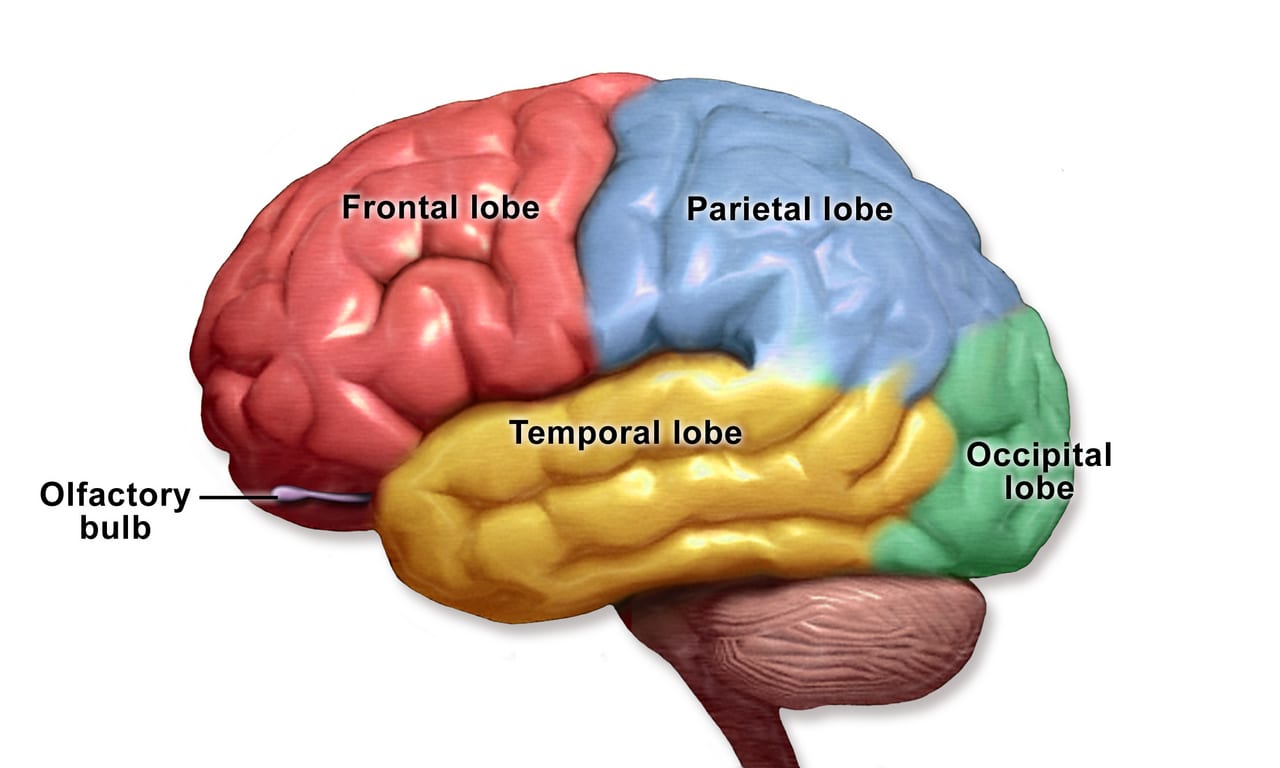
Illustration: BruceBlaus, CC BY 3.0.