

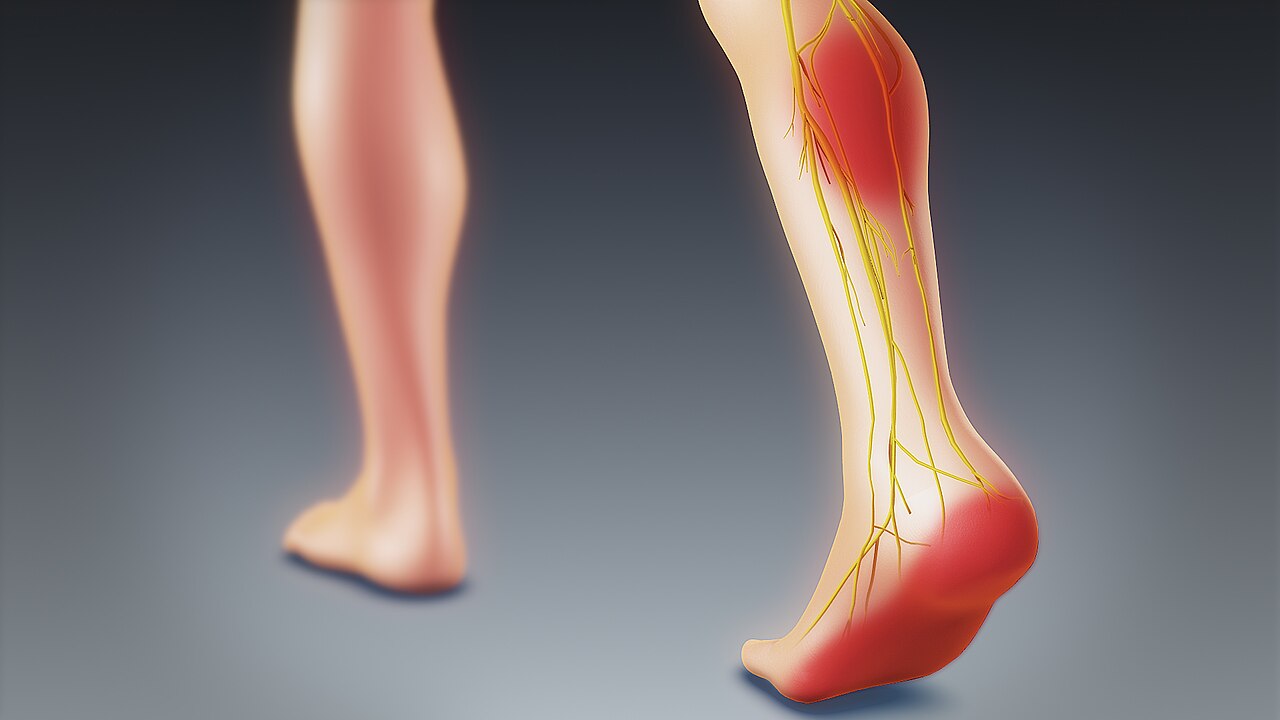
Composite case. A typical pattern drawn from many similar histories, not one specific patient.
Sciatica usually gets better in a few weeks to a few months, though it can last longer and it can come back. The case below is the good version: a first episode that eases over about six weeks with normal activity, exercise and some hands-on care. It shows what a quick recovery looks like, and what would change the plan.
Composite case. The patient below is a pattern drawn from many similar histories seen by the clinic team. No single patient is described, and the timings are an illustration, not a forecast.
The short version
- Sciatica usually gets better in a few weeks to a few months.
- Leg pain is usually worse than the back pain.
- Long spells sitting or lying down are best avoided.
- NICE advises against routine scans outside specialist care.
- Numbness around the genitals or new bladder problems means A&E.
The presentation
An office worker in their late thirties books in about ten days after a sharp pain started in the lower back while bending down. Within a couple of days the back ache has faded and a burning pain has taken its place, running through one buttock, down the back of the thigh and into the calf, with pins and needles in the foot.
That matches the NHS description of sciatica: symptoms in the bottom and the back of one leg, often reaching the foot, with any back pain usually less bad than the leg. Sneezing makes it jump. Long meetings are the worst part of the day, evenings are spent lying on the sofa, and some reading online has convinced them something in their spine has slipped for good.
What the first appointment covers
The first appointment is 45 minutes, and the early part is mostly questions. The osteopath's first job is to check for the warning signs listed further down, so bladder and bowel control, numbness around the genitals and symptoms in both legs all get asked about directly. Then comes the examination: strength in the foot and ankle, reflexes, skin sensation, and a straight leg raise.
In this case the strength and reflexes are normal, the straight leg raise brings on the familiar leg pain, and nothing suggests a serious cause. A slipped disc is one of the common causes, and it is the likely suspect here.
The patient asks about a scan. NICE says not to routinely offer imaging in a non-specialist setting, and to consider it in specialist care only if the result is likely to change management. The patient also hears that a herniated disc can shrink back by itself: a meta-analysis of 11 cohort studies found this happened in about two thirds of lumbar disc herniations treated without surgery. The authors noted the data were limited and included no randomised trials, so treat that figure as a guide.
The plan, and how the six weeks run
The NHS advice is to carry on with normal activities as much as possible, start gentle exercise early, use heat packs on the painful areas, and avoid long periods sitting or lying down. Moving may hurt, but the NHS is clear that it is not harmful. On painkillers, the same page says paracetamol is unlikely to help and it is not clear how much NSAIDs such as ibuprofen help, so a pharmacist is the right person to ask.
For this patient that means short walks through the day, getting up from the desk more often, and a small set of exercises chosen because they do not aggravate the leg. Hands-on treatment sits alongside that. NICE says to consider manual therapy only as part of a package that includes exercise, and that is how it is used here. Follow-ups are 30 minutes, with the gap between them widening as things improve.
Over the first fortnight the pins and needles ease and the burning becomes more of an ache. Bad spells still happen, usually after a long sit. By around week four the pain has drawn back from the calf to the buttock and upper thigh, and normal days at work are manageable. By around week six there is only an occasional ache after a long drive, and after four sessions the patient carries on alone with a simple exercise routine.
The patient is also told that sciatica can come back. The NHS advice on lowering that chance is regular exercise, sensible lifting, and not smoking.
How much of that was the treatment?
Probably less than patients or practitioners would like to think. In a trial of 250 people with sciatica of under a month, neither bed rest nor physiotherapy did better than simply continuing daily activities. A Cochrane review also found little or no difference for sciatica between advice to rest in bed and advice to stay active.
So a recovery like this one owes a lot to the natural course of the condition. The value of an appointment at this stage is ruling out anything serious, explaining what is going on and keeping someone moving with confidence. That last part may count for something: in a UK primary care cohort of 609 patients, believing the problem would last a long time was linked to poorer odds of improving. That is an association, and it does not prove that changing the belief changes the outcome.
When it does not go this way
Plenty of cases are slower than this one. In that same UK cohort, 55% had improved at 12 months, with improvement defined as a drop of at least 30% in disability. The NHS says to see a GP if the pain has not improved after a few weeks of home treatment, is getting worse, or is stopping you doing your normal activities.
For severe sciatica lasting six to twelve weeks, a Dutch trial of 283 patients compared early surgery with prolonged conservative care. Surgery relieved leg pain faster, but one-year outcomes were similar, and 39% of the conservative group went on to have surgery anyway. At five years there was still no significant difference between the groups, though at least 23% had ongoing symptoms that came and went, and 8% never showed any recovery. NICE says to consider spinal decompression when non-surgical treatment has not improved pain or function and scan findings match the symptoms. For sciatica lasting three months or more, a 2025 review of 50 trials found no high-quality evidence that any non-surgical treatment is better than the others.
There is more on assessment and treatment on our sciatica page.
When to get urgent help
The NHS says to go to A&E or call 999 if you have:
- sciatica on both sides
- weakness or numbness in both legs that is severe or getting worse
- numbness around or under your genitals, or around your bottom
- difficulty starting to pee, being unable to pee, or being unable to control when you pee, if this is not normal for you
- not noticing when you need to poo, or being unable to control when you poo, if this is not normal for you
These can be symptoms of a serious back problem that needs hospital treatment as soon as possible. Do not drive yourself. Ask someone to take you, or call 999.
If this sounds like what you're dealing with, an assessment is the next step. Book online here.
Illustration: Scientific Animations, CC BY-SA 4.0.