

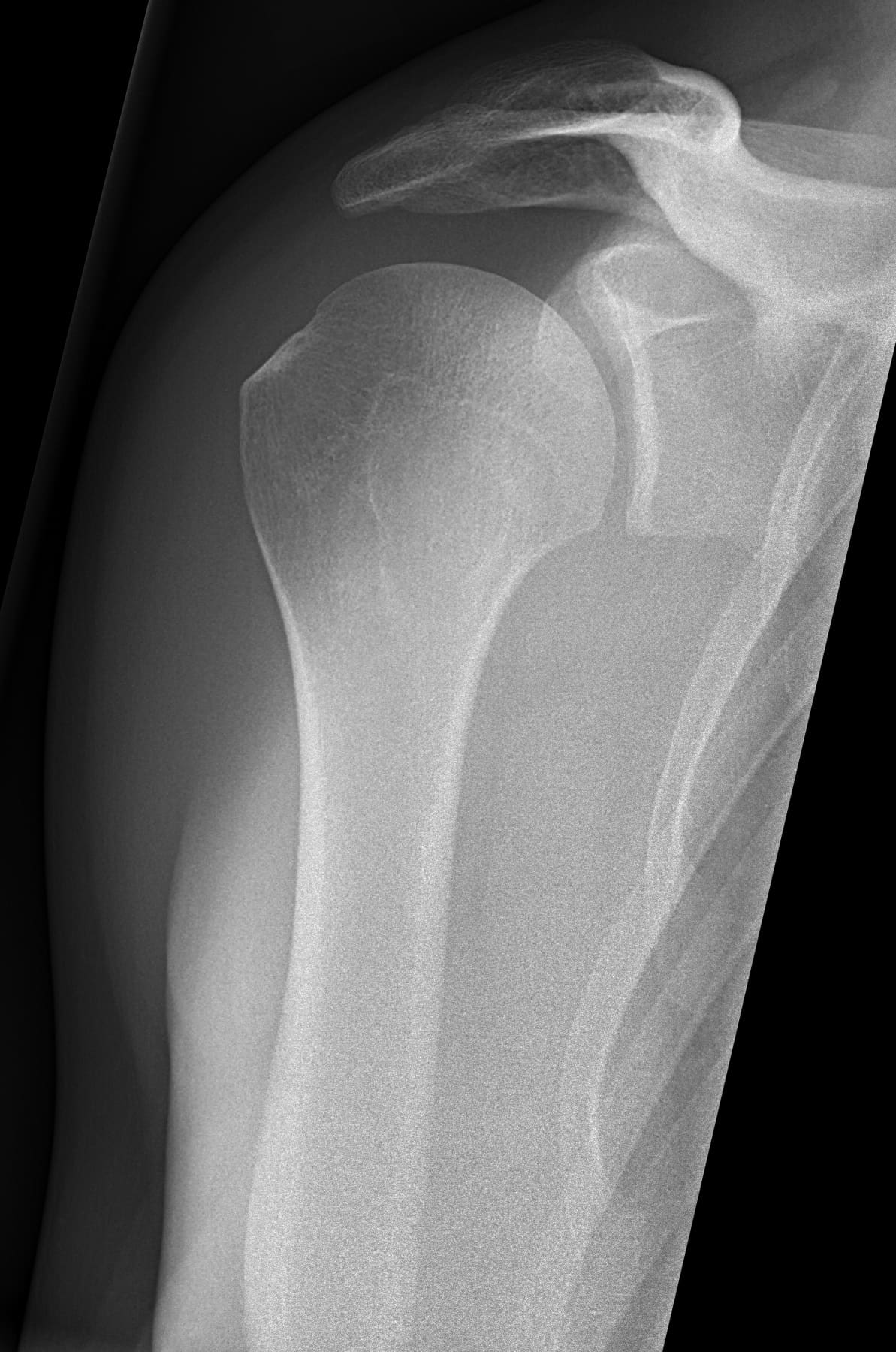
Frozen shoulder is what happens when the capsule of soft tissue around your shoulder joint becomes inflamed, then thickens and tightens, leaving the joint painful and stiff for months and sometimes well over a year. It typically affects people between 40 and 60. The part almost nobody is warned about is the shape of the recovery. It moves through three overlapping phases, and the whole thing can run for one to three years before it settles.
That long timeline is not a sign that something has gone wrong. It is how the condition behaves. Knowing the phases in advance is the single thing that makes living with it more bearable, because you stop expecting a quick result and start managing the stage you are actually in.
The short version
- Frozen shoulder is an inflamed, tightened joint capsule, not a muscle strain.
- It runs through three phases over one to three years.
- Most cases settle on their own, but slowly.
- Keeping the shoulder gently moving beats resting it completely.
- Diabetes raises the risk sharply, to roughly one in eight.
What frozen shoulder actually is
Your shoulder joint sits inside a bag of connective tissue called the capsule. In frozen shoulder, that capsule becomes inflamed, then gets tighter and shrinks, which is what produces the pain and the loss of movement. The medical name is adhesive capsulitis. According to the NHS, the two main symptoms are pain, which is often worse at night and disturbs sleep, and stiffness that makes the shoulder difficult to move.
This is a capsule problem, not a muscle problem, which is why the usual stretching and foam rolling that helps a tight muscle does little here. It is also not the same as a rotator cuff tear or impingement, even though they can feel similar at first. The giveaway is that frozen shoulder restricts movement in every direction, including when someone else tries to move your arm for you.
The three phases nobody warns you about
Frozen shoulder progresses through three overlapping phases. The NICE Clinical Knowledge Summaries describe them like this.
The painful phase lasts roughly 2 to 9 months. Pain builds gradually on movement, can become severe, and often disturbs sleep. The shoulder has not stiffened much yet, so this stage is mostly about pain rather than restriction.
The stiffness phase lasts roughly 4 to 12 months. The pain eases off and tends to show up only at the end of your range, but the stiffness takes over. Reaching overhead, fastening a seatbelt, or putting on a coat becomes genuinely hard. Function can be substantially limited here even though it hurts less.
The resolution phase lasts roughly 12 to 42 months. Range of movement gradually returns and the stiffness fades. Because the phases overlap, the edges are blurry, and most people only realise they have moved into the next stage looking back.
Add those ranges up and you can see why frozen shoulder commonly takes one to three years. That is the honest timeline, and it is worth knowing before you start, so a slow month does not feel like a setback.
Who gets it, and why diabetes matters
Frozen shoulder typically affects people aged 40 to 60, and it is more common in women and in people who have already had it in the other arm. It can be primary, meaning it appears for no obvious reason, or secondary, meaning it follows something else such as an injury, a period of the arm being immobilised after surgery, or another health condition.
Diabetes is the standout association. NICE notes the prevalence of frozen shoulder in people with diabetes is estimated at around 13 percent, far higher than in the general population. The reason is not fully understood, and the NHS makes the practical point that keeping up with regular diabetes check-ups matters. Thyroid problems and cardiovascular disease are also linked.
What helps, and what to leave alone
The aim of treatment is to control pain and keep as much movement as possible while the condition runs its course. The NHS sets out a simple ladder: start with pain relief such as paracetamol or an anti-inflammatory, move to stronger options or a steroid injection if needed, and work on getting movement back with gentle exercises and physiotherapy.
A few things matter more than people expect. Keeping the shoulder gently moving is better than resting it completely, because a shoulder that is kept still tends to get more painful, not less. A heat pack wrapped in a towel for up to 20 minutes can ease things before you move. What does not help is inventing your own strenuous gym exercises to force the range back, which usually flares the pain.
In clinic, hands-on osteopathy will not melt a frozen capsule overnight, and we would not promise that. What it can do is reduce the protective tension in the muscles around the shoulder and neck, keep the surrounding joints moving, and give you a graded set of exercises matched to the phase you are in. The evidence for manual therapy in frozen shoulder is mixed, so we are honest about it: it tends to help with comfort and function alongside the natural course, rather than shortening the condition by itself.
When to see a GP or get urgent help
Most frozen shoulders can be managed without alarm, but some shoulder pain needs prompt attention. See a GP if you have shoulder pain and stiffness that does not go away, or if the pain is so bad it makes it hard to move your arm and shoulder at all.
Seek urgent care, rather than waiting, if your shoulder pain follows a fall, a dislocation, or a forced stretch and you have severe pain with significant weakness, for example if you cannot hold the arm out to the side. Also get it checked quickly if the joint is hot, red, and swollen, or if you feel feverish, since that points to something other than a frozen shoulder. New numbness, pins and needles, or weakness running down the arm is another reason to be seen sooner.
How we approach it at the clinic
The first job is to confirm it actually is a frozen shoulder and not a rotator cuff problem, referred pain from the neck, or something that needs imaging. From there we match the plan to your phase: more pain control and gentle movement early on, more loaded exercise as the resolution phase arrives. An initial assessment is £75 and covers a full history, a movement assessment of the shoulder and neck, and a plan you can actually follow at home.
If this sounds like what you are dealing with, an assessment is the next step. Book at hardimanperformance.com/book-online.