

A first osteopathy session at Hardiman Performance takes 45 minutes and costs £75. You get a full history, a hands-on examination, a diagnosis explained in plain language, treatment in the same appointment, and a home exercise plan to take away. You do not need a GP referral to book one.
The short version
- An initial osteopathy appointment is 45 minutes and costs £75.
- Wear or bring shorts and a t-shirt.
- History and examination come first, then hands-on treatment.
- You leave with exercises and an estimate of how many sessions.
- No GP referral is needed. Major insurers are recognised.
What actually happens in the 45 minutes
The appointment starts with talking, not treatment. Where the pain is, when it started, what makes it worse, what makes it easier, how it behaves overnight. Then the less interesting but more important part: general medical history, medication, previous injuries, any scans you have already had.
Some of those questions will feel unrelated to your sore shoulder. They are there to rule things out. Most of the time they rule nothing out and we move on, which is exactly the point of asking them.
Next is the physical assessment. You will be asked to move: bend, twist, reach, walk, sometimes squat, depending on the problem. The osteopath is watching for what moves well, what does not, and what reproduces your symptoms. Where it is relevant, that includes orthopaedic and neurological testing, so checking reflexes, strength and sensation.
Then you get told what the working diagnosis is, in plain English, before anything is treated. If the person in front of you cannot explain what they think is going on in a couple of sentences, they do not understand it well enough yet.
What to wear
Shorts and a t-shirt or vest are ideal, and you are welcome to bring them and change at the clinic. For a lower back or hip problem we need to see the lumbar spine and pelvis actually move. For a shoulder or neck problem we need the shoulder blades visible.
Nothing gets examined without asking you first. Consent, and your right to have someone else in the room with you, sits inside the practice standards that every registered UK osteopath works to. If you would rather stay covered, say so, and the assessment is adapted around it.
What the treatment itself feels like
Most of what happens is soft tissue work, joint articulation and stretching, applied slowly and deliberately to the structures that came up in the assessment. The NHS describes osteopathy as massaging and stretching to treat injuries, improve movement and relieve pain, which is a fair plain-English description of the bulk of it.
Some techniques are quicker and more direct than that. Those are always explained and agreed with you first, and they can be left out entirely. They are one tool among several, not the point of the appointment, and treatment works perfectly well without them.
It should not be painful. Working into an already sore area can be uncomfortable, and you should say so when it is, because the pressure gets adjusted. Anecdotally, some people feel mildly sore for a day or two afterwards, in the way you might after unfamiliar exercise.
What you leave with, and how many sessions
Everyone leaves with something to do at home. That is not padding. NICE guidance on low back pain and sciatica (NG59) recommends manual therapy, meaning manipulation, mobilisation or soft tissue techniques, only as part of a treatment package that includes exercise. Hands-on work on its own is not the treatment. It is the part that makes the exercise possible to do.
You also get an honest estimate of how many appointments this is likely to take. Nobody can promise a number, and anyone who gives you one to the session is guessing. What we can say is that if there is no meaningful change after a small number of sessions, the right response is to revisit the diagnosis or refer you on, not to keep booking you in. Follow-ups are 30 minutes and £60.
If you are not certain whether your problem is something we handle, the what we treat page lists the common presentations.
Cost, insurance and referrals
An initial assessment is £75 for 45 minutes. Follow-ups are £60 for 30 minutes. The prices are on the fees page and they do not change once you are in the room.
We are recognised by Vitality, AXA PPP Healthcare, Aviva, WPA, Cigna and Simplyhealth. Check your policy for cover and excess first, book in the usual way, and you get a same-day invoice for the claim. Self-pay is equally welcome, and you never need a GP referral.
One thing worth knowing before you book with anyone, anywhere: in the UK, osteopath is a title protected in law. Everybody using it has to be on the register held by the General Osteopathic Council. You can search that register yourself in under a minute, and it is a reasonable thing to do.
When to see a GP or call 111 instead
Osteopathy is not the right first call for everything. The NHS advises calling 999 or going to A&E if you have back pain together with pain, tingling, weakness or numbness in both legs, a loss of feeling around your genitals or anus, or changes to your bladder or bowels such as difficulty passing urine or incontinence. Those can signal a spinal emergency and need same-day assessment.
Ask for an urgent GP appointment or contact 111 if the pain started suddenly and severely, is getting worse quickly, or comes with feeling hot, cold, shivery or generally unwell. See a GP too if you have lost weight without trying, or there is a lump or swelling in your back.
If you arrive at the clinic with any of that, you will be told the same thing and pointed in the right direction. Knowing what not to treat is part of the job.
If this sounds like what you are dealing with, an assessment is the next step. Book online here.
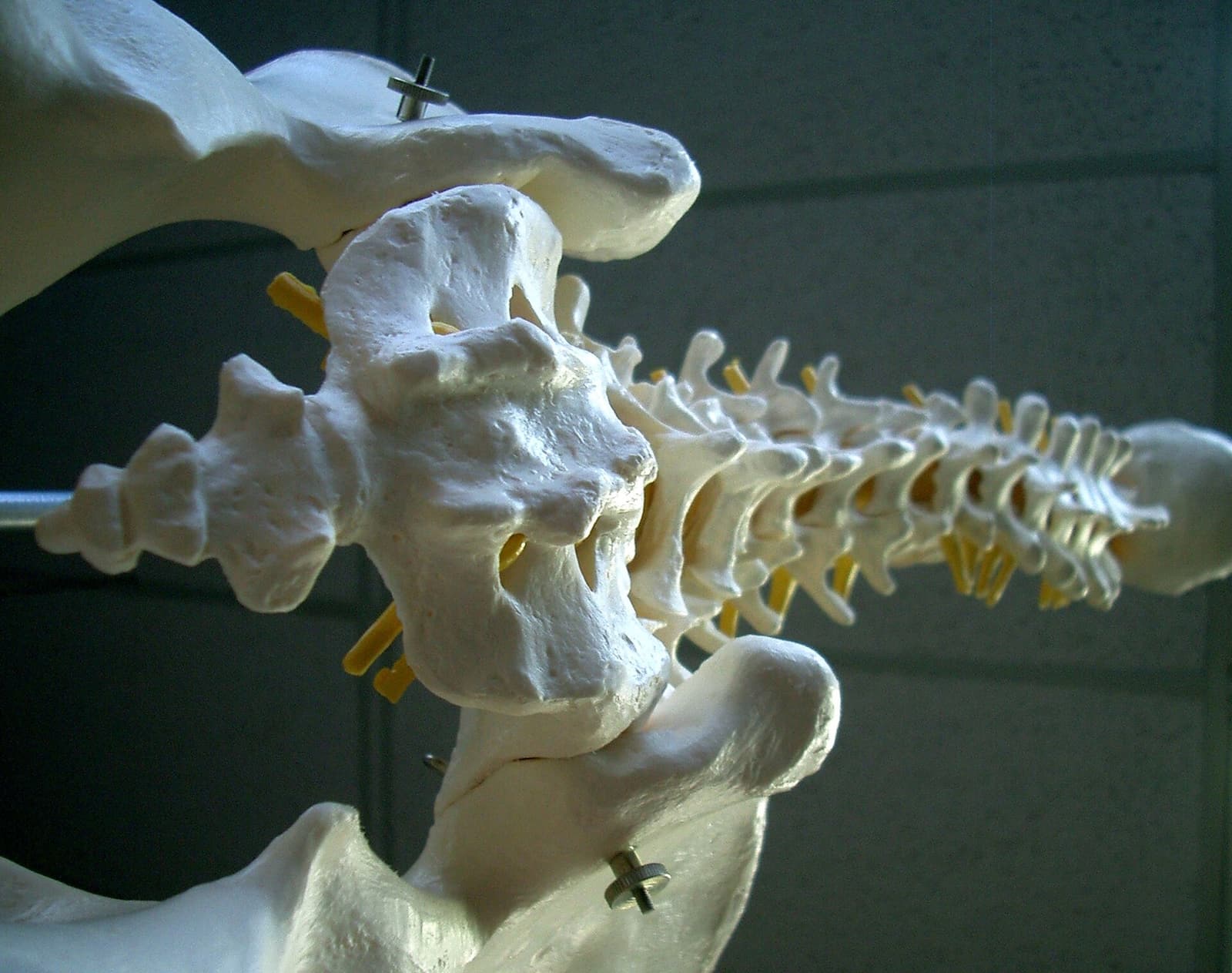
Image: anatomical spine and pelvis model, by Steve Jurvetson, CC BY 2.0, via Wikimedia Commons.