

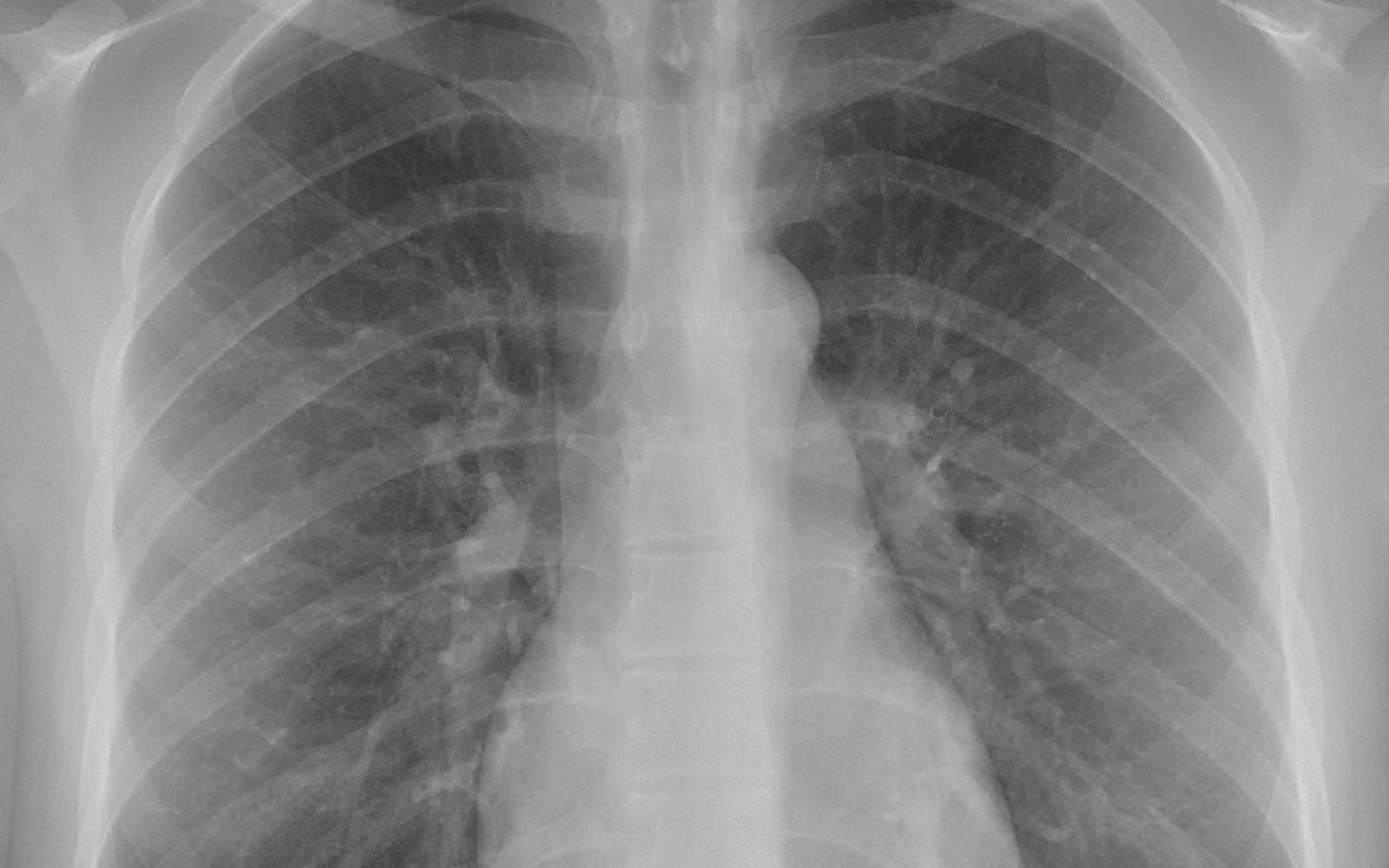
Costochondritis is inflammation where your ribs join your breastbone, and it is one of the most common reasons an otherwise healthy adult gets sharp pain at the front of the chest that gets worse when they breathe deeply, twist, or press on the sore spot. It is benign, and it usually settles on its own.
It is also a diagnosis you arrive at by ruling other things out, which is why the NHS advice on costochondritis is to always get medical advice for unexplained chest pain that does not go away, and to contact 111 if you think costochondritis is what you have. This post is here to help you understand the condition. It is not here to talk you out of that call.
The short version
- Costochondritis is inflammation where the ribs meet the breastbone.
- It causes sharp front-of-chest pain, worse on movement, deep breaths and pressure.
- Tenderness when you press does not rule out a heart problem.
- It usually settles by itself over a few weeks to several months.
- Get any unexplained chest pain checked before assuming it is musculoskeletal.
What costochondritis actually is
You have twelve pairs of ribs. The top seven attach directly to the breastbone through a strip of cartilage, and the joints where that cartilage meets bone are called the costochondral junctions. They are made of hyaline cartilage, the same tissue that lines a knee or a hip, and like any joint tissue it can become irritated and inflamed (StatPearls, chest wall anatomy).
When that happens, it is usually around the second to fifth costochondral joints, so the pain sits in a band an inch or two either side of the breastbone rather than deep behind it. A review of chest wall problems in athletes describes exactly that distribution, and notes the condition is self-limiting with no clear single cause (Gregory and colleagues, Sports Medicine).
The NHS lists the things it has been linked to: an injury to the chest, repetitive upper body movements such as lifting, a lot of coughing, and infection. The last two are worth flagging, because patients rarely connect them. A chest infection that leaves you coughing for three weeks loads those cartilage joints many thousands of times. So does a new training block heavy on bench press, dips and overhead work.
Why chest wall tenderness does not rule out your heart
This is the part I want people to read twice. If pressing on your chest reproduces your pain exactly, that makes a musculoskeletal cause more likely. It does not make a cardiac cause impossible. In a review of costochondritis for primary care clinicians, coronary artery disease was present in 3 to 6 percent of adult patients who had chest pain and chest wall tenderness on palpation (Proulx and Zryd, American Family Physician). The two can sit in the same chest at the same time.
That same review is clear about who needs more than reassurance: patients over 35, anyone with a history of or risk factors for coronary artery disease, and anyone with heart or lung symptoms alongside the pain should have an ECG, and possibly a chest X-ray.
The base rates back this up. In a study that recorded 22,294 GP consultations, chest pain was the reason for the visit in 281 of them. Musculoskeletal pain was the most common final diagnosis at 33.1 percent, so it is genuinely the single likeliest answer. But potentially life-threatening conditions accounted for 8.4 percent of those chest pain cases (Hoorweg and colleagues, Heart). One in twelve is not a rounding error, and it is not a risk worth carrying on a hunch.
So the order matters. Get the serious causes excluded first, then work on the chest wall.
The conditions it gets confused with
Once cardiac and respiratory causes are off the table, the Sports Medicine review sets out the main look-alikes:
- Tietze's syndrome. Pain at the same joints, but with visible or palpable swelling. Costochondritis on its own does not swell.
- Slipping rib syndrome. Intermittent pain at the lower costal margin, related to posture or movement, reproduced by hooking a finger under the rib edge and pulling forwards.
- Intercostal muscle strain. Tenderness between the ribs rather than at the junction with the breastbone, usually after a specific twist, cough or lift.
- Rib stress fracture. Well documented in golf, rowing and baseball pitching. Worth thinking about in anyone with high repetitive trunk load and pain that is getting worse rather than better.
- Referred pain from the thoracic spine. The mid-back joints and the ribs share nerve supply, so a stiff, irritable thoracic segment can produce pain felt at the front.
Pain at the breastbone does not always start at the breastbone, which is why a decent assessment looks at the back as well as the front.
What actually helps
Time does most of the work. The NHS is blunt about the timescale: costochondritis usually gets better on its own, and it can last from a few weeks to several months. Knowing that in advance changes how people cope with it, because week six of an unexplained chest pain is a frightening place to be if nobody has told you week six is normal.
For pain relief, anti-inflammatory painkillers such as ibuprofen may be recommended. If the pain is severe and is not improving over time, the NHS notes that a steroid injection or local anaesthetic may be offered.
Be honest about what the evidence supports. The primary care review states plainly that clinical trials of treatment are lacking, and that standard practice is simple painkillers, avoiding the activities that overload the chest wall, and reassurance. That is a thin evidence base, and anyone selling you a protocol that reliably shortens it is going beyond what is known.
Practically, that means modifying load rather than stopping everything. Drop the pressing, the dips and the heavy chest stretches for a few weeks. Keep walking, keep your mid-back moving, and keep breathing normally, because shallow guarded breathing tends to make the whole rib cage stiffer and more sore.
Where osteopathy fits, and where it does not
There is no trial evidence that manual therapy speeds up costochondritis, and I am not going to imply otherwise. What an assessment offers is something more specific.
A practitioner can confirm that your pain is genuinely reproducible from the chest wall, examine the thoracic spine and rib joints behind it, look at how you are loading the area in training or at work, and tell you clearly if the picture does not fit. Where a stiff, irritable mid-back segment is contributing, treating that region and restoring normal rib movement often eases the front-of-chest pain, and that is a reasonable thing to try once the serious causes are excluded.
The other half of the job is knowing when to send you elsewhere. Osteopaths in the UK are statutorily regulated by the General Osteopathic Council, and screening for conditions that need a doctor rather than a set of hands is part of the training. If your history or examination raises anything, the right answer is a referral, not a course of treatment. You can see the range of problems we do assess on our what we treat page.
When to get urgent help
Red flags first, every time. Following the NHS chest pain guidance, call 999 if you have:
- Chest pain that started suddenly, or spreads to your arm, neck or jaw, or your chest feels tight. This could be a heart attack.
- Chest pain with difficulty breathing, a fast heartbeat, or coughing up blood. This could be a blood clot on the lung.
- Sudden chest or back pain that feels like something tearing inside, with shortness of breath and problems with walking, vision or speech.
Do not drive yourself to A&E. Call 999 and follow the advice you are given.
Short of that, contact 111 for any unexplained chest pain that does not go away, including pain you think is costochondritis. And if chest pain comes with fever, unexplained weight loss, or you have a history of cancer, that is a GP conversation rather than a manual therapy one.
If a doctor has ruled out the serious causes and you are left with a sore, grumpy chest wall that is limiting how you train, work or sleep, an assessment is the next step. Book online here.