

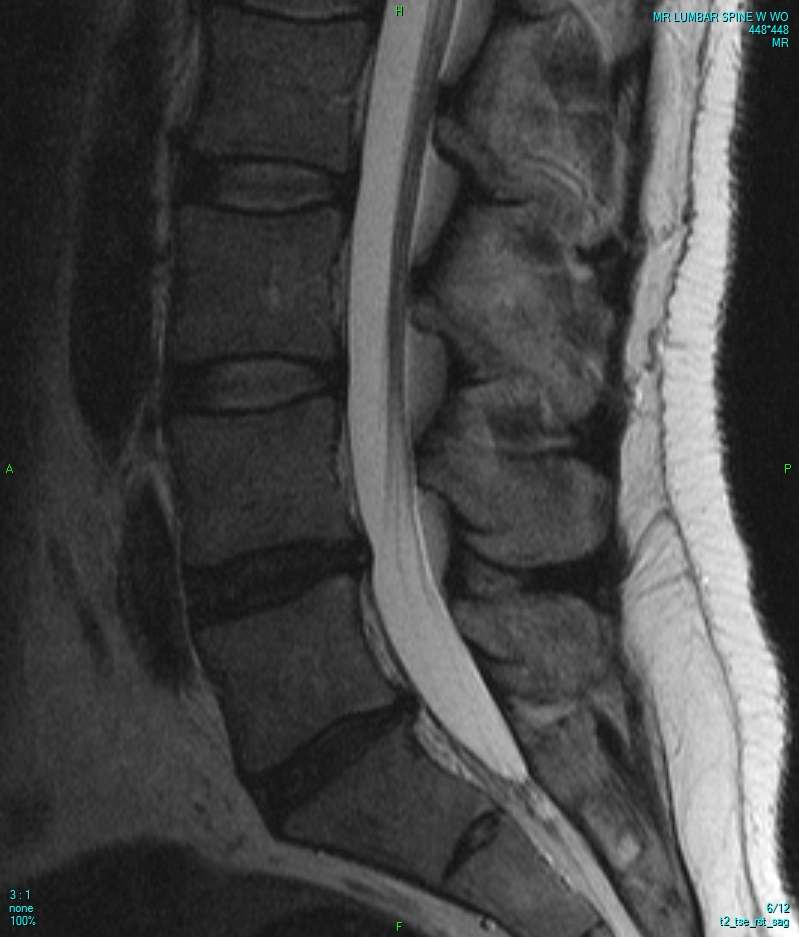
Most back pain after a long drive is your back reacting to a position it held for too long, not damage caused by the car. It usually settles within a day or two once you are moving normally again. The exception is pain with numbness, leg weakness or bladder changes, which needs checking rather than waiting.
That is the short answer. The longer one is more interesting, because the research on sitting and back pain does not say what most people assume it says, and the part of the trip that actually provokes a back is often not the driving at all.
The short version
- Post-drive back pain is usually a positional flare, not new structural damage.
- Sitting on its own is not a proven cause of low back pain.
- Professional drivers still report high rates of low back trouble.
- Breaking the drive up beats buying a back brace.
- Numbness in both legs or bladder changes means A and E today.
Why a long drive winds your back up
A car seat does something that almost nothing else in your day does. It holds your spine, hips and shoulders in one arrangement, with no variation, for an hour or more, while your right leg works the pedals and your arms are held out in front of you.
Three things follow from that. The muscles running either side of your spine work at a low level continuously rather than switching on and off as they do when you walk. The seat base tips your pelvis backwards slightly, which flattens the inward curve of your lower back and loads the discs and joints differently to standing. And your hip flexors, the muscles at the front of the hip that lift your knee, sit shortened for the whole drive.
None of that is harmful. It is just monotonous. Tissue that is loaded in one way for a long stretch gets stiff and complains when you finally ask it to do something else, which is why the worst moment is usually not mile 90. It is the first thirty seconds after you open the door.
What the evidence actually says about sitting
This is where the standard advice gets shaky. If sitting damaged backs, you would expect people who sit for a living to develop back pain at higher rates than everyone else. The research has looked, repeatedly, and has not found that.
A systematic review in The Spine Journal assessed occupational sitting against formal causation criteria and reported strong, consistent evidence of no association between occupational sitting and low back pain, with no dose-response trend. Its conclusion was that occupational sitting is unlikely to be independently causative of low back pain. A separate review of 18 prospective cohort studies covering 24,315 people reached the same verdict, finding strong evidence that sitting is not associated with developing low back pain.
So the car seat is not wearing your spine out. What it can do is provoke symptoms in a back that is already sensitive, which is a different problem with a different answer.
The honest complication is that professional drivers do report a lot of back pain. A review of 56 studies covering 18,882 professional drivers found the low back was the most commonly reported region, with a pooled prevalence of 53 per cent. Those two findings can both be true. Driving for a living involves far more than sitting, and the sitting is probably the least of it.
The parts of driving that are not the sitting
When someone tells me their back went after a drive, the drive is rarely the whole story. In my years of practice, the details that mattered were usually these.
Getting out of the car. You have been still for two hours, and the exit is a twist, a shift of weight onto one leg and a push up, all at once. It is the most demanding thing you have asked your back to do since you got in.
The boot. Standing up after a long drive and immediately bending over the lip of a boot to lift a heavy case at arm's length is a genuinely awkward load, and it lands on tissue that has just spent two hours doing nothing. If you can point to a moment when your back went, it is often this one.
Vibration. Whole-body vibration through the seat is a plausible contributor, and it is the one factor the sitting research leaves open. The cohort review above rated the evidence on whole-body vibration as conflicting rather than clear. Worth knowing if you drive a van or a lorry all day. Less relevant for an annual trip to Cornwall.
Everything either side of the drive. People drive long distances to do things. The back that hurts on Sunday night often did the loading on Saturday, and the drive simply stopped it settling.
What to do on the drive, and when you get out
The aim is variation, not perfect posture. There is no single correct driving position, and hunting for one tends to make people more anxious about their backs rather than less.
- Break the drive up and make the stop a walking stop. Two minutes of actual walking does more than ten minutes sitting in a service station. This is the single most useful thing on the list.
- Bring the seat closer. If you are reaching for the wheel, your upper back and shoulders hold you forward for the whole drive. Elbows should be comfortably bent.
- Raise the backrest towards upright. Reclined looks relaxed and pushes your pelvis into a slump.
- Support the lower curve. Use the seat's built-in lumbar support, or a rolled-up jumper. This is a comfort measure rather than a treatment, so set it where it feels better and leave it alone.
- Shift about. Change your position occasionally. The stiffness comes from staying still, so moving is the antidote.
- Stand before you lift. Get out, walk for a minute, then empty the boot. Bring the case close to you before you lift rather than reaching over the bumper.
One thing to skip: back belts. NICE guideline NG59 specifically advises against offering belts or corsets for managing low back pain. A lumbar cushion for comfort is a different object and is fine, but the support aisle is not where this gets solved.
If the back is already sore, the NHS advice is to stay active and keep going with normal activities rather than taking to bed, and it notes that paracetamol on its own is not recommended for back pain. Heat or an ice pack can take the edge off while you keep moving.
When the drive is not the whole story
Some symptoms are not a stiff back and should not be managed with a lumbar cushion. The NHS says to call 999 or go to A and E if back pain comes with pain, tingling, weakness or numbness in both legs, a loss of feeling around your genitals or anus, changes in bladder or bowel control, chest pain, or if it started after a serious accident such as a car crash.
Ask for an urgent GP appointment or call 111 if you feel hot, cold, shivery or generally unwell with the pain, or if severe pain starts suddenly or is getting worse quickly. Book a routine GP appointment if the pain has not improved after a few weeks, is worse at night or when you cough, comes with unexplained weight loss or a lump, or sits high between your shoulder blades rather than in your lower back.
Pain that travels down the back of the leg past the knee, with pins and needles or numbness, is more likely to be sciatica than a simple stiff back. It often improves on its own, but it is worth getting assessed rather than sitting through another long drive hoping.
If it happens every time you drive
One sore back after a house move is unremarkable. A back that flares on every motorway run is telling you something about its current capacity, and that is worth assessing properly.
NG59 is clear on what a sensible plan looks like. It advises against routine imaging outside specialist settings, because scans of painless backs are full of findings that mean very little. It recommends staying active and keeping to normal activities. And it supports manual therapy, meaning manipulation, mobilisation or soft tissue work, only as part of a package that includes exercise. Hands-on treatment on its own is not the plan. It buys you a more comfortable window in which to build the thing that actually changes how much driving your back tolerates.
That is how we approach back pain at the clinic: work out what is driving it, settle the symptoms enough to move properly, then load the area through structured rehabilitation so that long drives stop being an event. An initial assessment is £75 for 45 minutes and includes a home exercise plan to take away.
If this sounds like what you are dealing with, an assessment is the next step. Book online here.